WASHINGTON, May 14 —
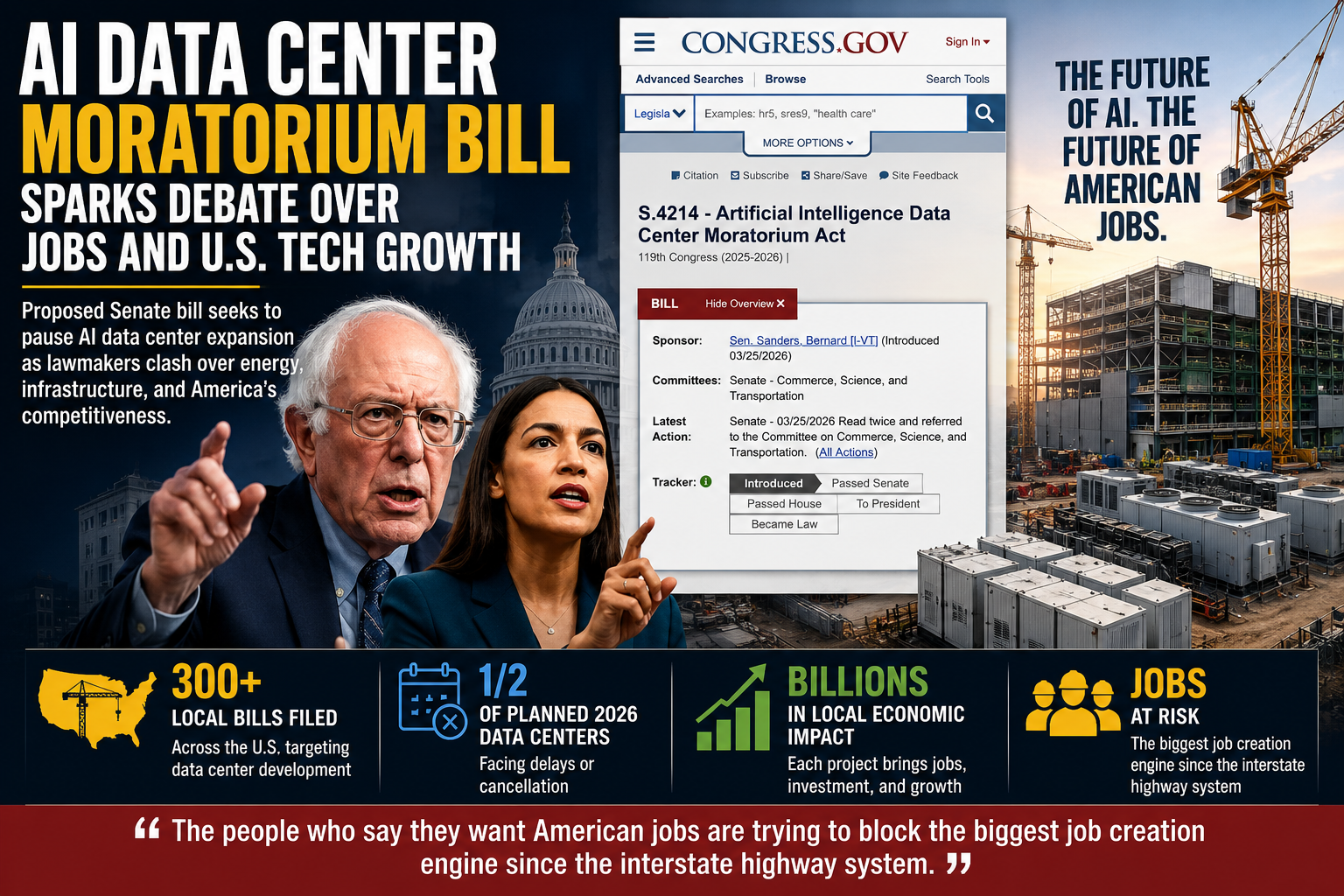
- Proposed Legislation: Sen. Bernie Sanders introduced the Artificial Intelligence Data Center Moratorium Act (S.4214) in the 119th Congress.
- Bill Status: The proposal was introduced on March 25, 2026, and referred to the Senate Commerce, Science, and Transportation Committee.
- Policy Debate: Supporters argue rapid AI infrastructure growth strains power grids and local resources.
- Industry Concern: Critics warn delays to AI data center projects could slow investment, jobs, and U.S. competitiveness.
- Local Impact: AI-related facilities often bring multibillion-dollar construction projects, tax revenue, and employment to local communities.
| Metric | Value | Context |
|---|---|---|
| Bill Number | S.4214 | AI Data Center Moratorium Act |
| Congress Session | 119th Congress | 2025–2026 session |
| Introduction Date | March 25, 2026 | Senate filing date |
| Committee | Commerce, Science & Transportation | Senate referral |
| Estimated Local Impact | Billions of Dollars | Potential economic contribution per data center |
AI Infrastructure Push Faces Political Resistance
A proposed Senate bill seeking to pause artificial intelligence data center construction has triggered a broader debate over the future of U.S. technology infrastructure, economic development, and energy demand.
The Artificial Intelligence Data Center Moratorium Act (S.4214), introduced by Sen. Bernie Sanders, would place new scrutiny on the rapid expansion of facilities used to power artificial intelligence systems.
The proposal arrives as AI companies race to build larger computing hubs to support advanced models, cloud services, and enterprise demand.
Jobs vs. Infrastructure Concerns
Critics of the proposal argue restrictions on AI infrastructure risk slowing one of the country’s fastest-growing investment cycles.
Large-scale data center developments often involve billions of dollars in construction spending, electrical upgrades, long-term tax revenue, and skilled labor opportunities for local economies.
Industry advocates say delays or cancellations could weaken America’s position in the global competition for artificial intelligence leadership, particularly as countries increase spending on computing infrastructure.
Supporters of tighter oversight, however, argue rapid data center growth raises concerns about energy consumption, land use, water demand, and pressure on local utilities.
Growing Local Pushback
Beyond federal legislation, local governments across the country have increasingly debated zoning, environmental approvals, and energy requirements tied to new data center projects.
The discussion reflects broader tension between accelerating AI investment and balancing local economic, environmental, and infrastructure priorities.
What Comes Next
The bill remains in the early stages of the legislative process after being referred to committee.
Even so, the proposal underscores growing political divisions over how aggressively the United States should expand AI infrastructure as demand for computing power continues to rise.