BEIJING, May 16 —
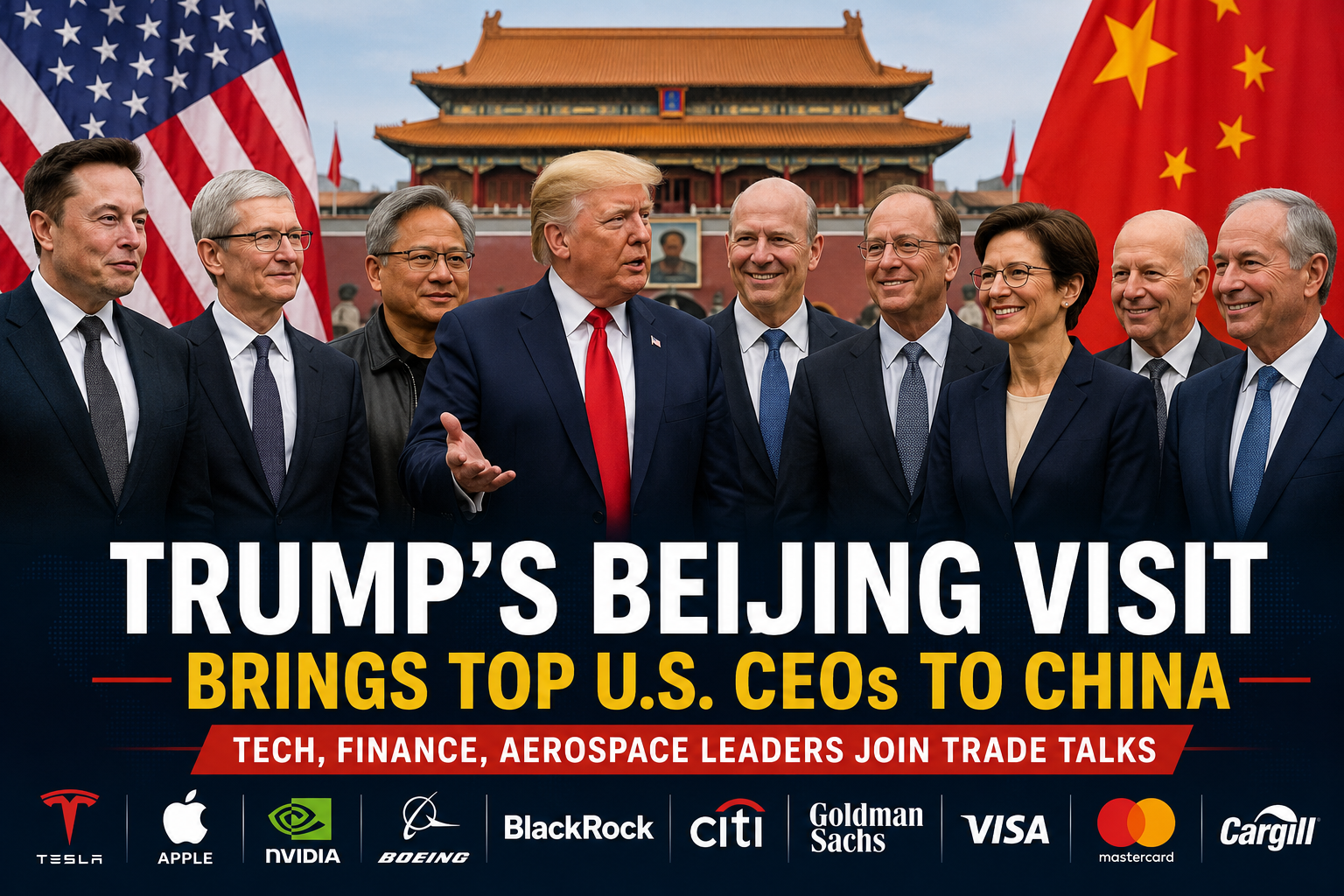
- Delegation Size: President Trump traveled with approximately 16 senior U.S. business leaders during his May 2026 visit to Beijing.
- Technology Leaders: Executives from Tesla, Apple, Nvidia, Qualcomm, Micron, and Meta joined discussions tied to AI, semiconductors, and consumer technology.
- Finance Presence: CEOs from BlackRock, Citigroup, Goldman Sachs, Blackstone, Visa, and Mastercard represented major U.S. financial interests in China.
- Industrial Focus: Boeing, GE Aerospace, and Cargill executives participated as trade and industrial cooperation remained central topics.
- China Exposure: Companies with significant China dependence — especially Tesla, Apple, Nvidia, Boeing, and Citigroup — drew the most attention.
- Market Access: Chinese officials reportedly used meetings to discuss greater market access, investment opportunities, and commercial agreements with U.S. firms.
- Last-Minute Addition: Nvidia CEO Jensen Huang was reportedly added shortly before departure amid growing focus on AI and semiconductor policy.
| Executive | Company | Sector |
|---|---|---|
| Elon Musk | Tesla / SpaceX | EVs & Aerospace |
| Tim Cook | Apple | Consumer Technology |
| Jensen Huang | Nvidia | AI & Semiconductors |
| Kelly Ortberg | Boeing | Aerospace |
| Larry Fink | BlackRock | Asset Management |
| Jane Fraser | Citigroup | Banking |
| David Solomon | Goldman Sachs | Investment Banking |
| Stephen Schwarzman | Blackstone | Private Equity |
| Cristiano Amon | Qualcomm | Semiconductors |
| Ryan McInerney | Visa | Payments |
| Michael Miebach | Mastercard | Payments |
| Sanjay Mehrotra | Micron | Memory Chips |
| Brian Sikes | Cargill | Agriculture |
| Lawrence Culp Jr. | GE Aerospace | Aerospace |
| Senior Meta Executive | Meta | Technology |
| Senior U.S. Executive | Undisclosed/Varied Reports | Industrial/Finance |
A Business-Heavy Delegation Arrives in Beijing
President Donald Trump’s May 2026 visit to Beijing included one of the largest groups of U.S. corporate leaders to accompany a president to China in recent years, underscoring the economic stakes surrounding the summit.
The delegation reportedly included executives from industries ranging from electric vehicles and semiconductors to banking, payments, aerospace, and agriculture. The trip came as Washington and Beijing continued to manage tensions over tariffs, artificial intelligence, supply chains, and investment restrictions.
The CEOs Who Joined the Visit
Among the most prominent executives were Elon Musk, chief executive of Tesla and SpaceX; Tim Cook, CEO of Apple; and Jensen Huang, CEO of Nvidia, whose reported last-minute inclusion drew attention because of ongoing U.S.-China disputes over advanced chip exports.
The aerospace and manufacturing sectors were represented by Kelly Ortberg of Boeing and Lawrence Culp Jr. of GE Aerospace, while agriculture giant Cargill sent CEO Brian Sikes as China explored food and commodity trade discussions.
Financial executives included Larry Fink of BlackRock, Jane Fraser of Citigroup, David Solomon of Goldman Sachs, and Stephen Schwarzman of Blackstone. Payment companies Visa and Mastercard also had representation through CEOs Ryan McInerney and Michael Miebach.
Technology participation extended to Cristiano Amon of Qualcomm, Sanjay Mehrotra of Micron, and senior representation from Meta, though reports differed on whether CEO Mark Zuckerberg attended personally.
Why These Executives Matter
The business leaders attracted attention because many oversee companies deeply tied to Chinese manufacturing, sales, or regulatory approval.
Tesla depends heavily on production from its Shanghai operations, Apple continues to rely on China-based supply chains, and Nvidia faces restrictions on advanced AI chip sales to Chinese buyers. Meanwhile, Boeing has long viewed China as a major aviation growth market after years of commercial tensions.
Financial firms including Citigroup, Goldman Sachs, and BlackRock also continue seeking broader access to China’s financial markets as Beijing signals cautious openness to foreign investment.
Trade and Business at the Center of Talks
While diplomatic issues such as tariffs, technology controls, Taiwan, and broader geopolitical competition remained part of the summit agenda, commercial diplomacy appeared to play a central role.
Chinese officials reportedly used the visit to discuss possible investment expansion, financial cooperation, and new commercial agreements with U.S. companies, particularly in sectors tied to advanced technology, aviation, and consumer demand.
The trip highlighted how, despite strategic rivalry between Washington and Beijing, major American corporations continue to view China as a critical market for long-term growth.