WASHINGTON/BEIJING, May 14 —
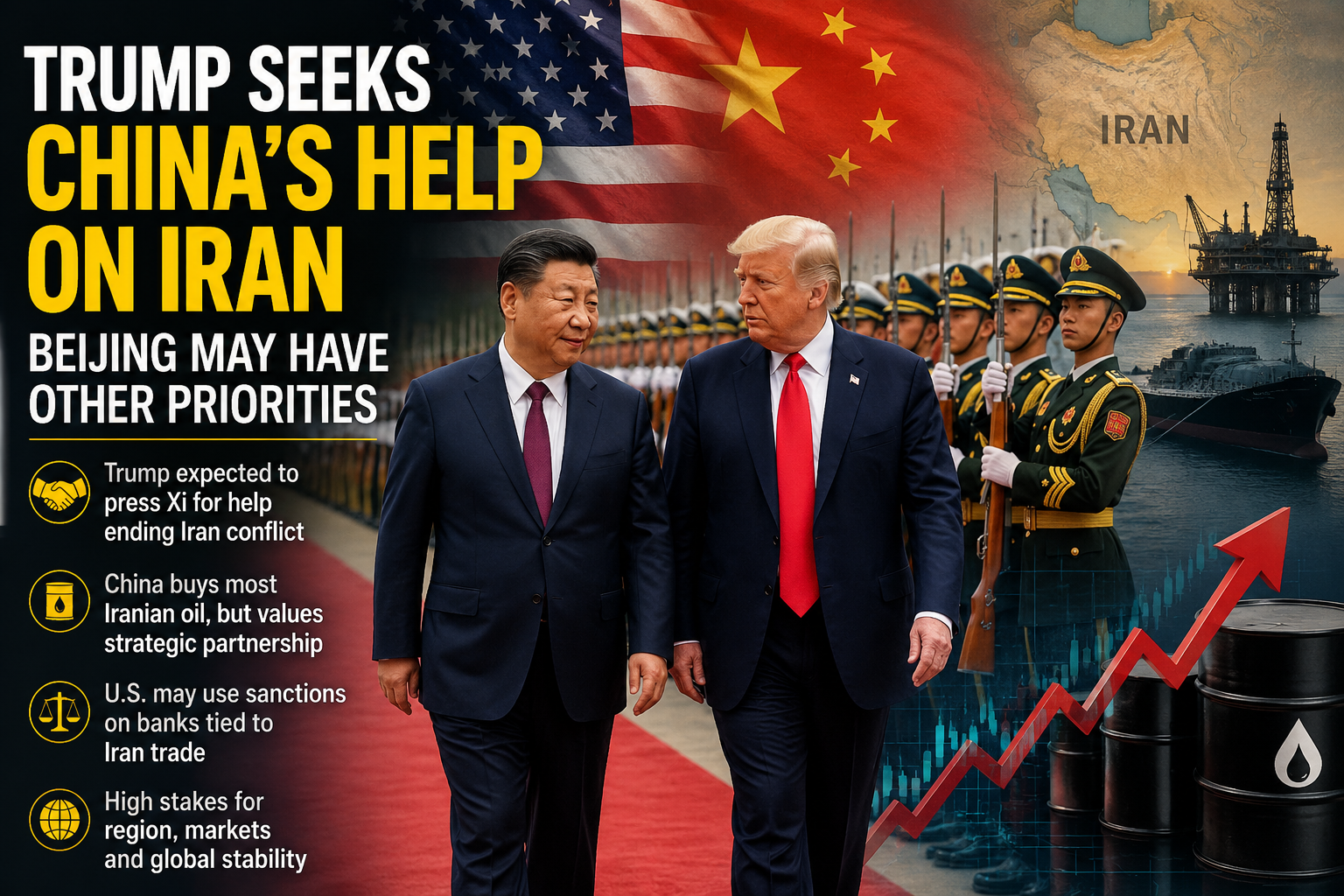
- Trump-Xi Talks: President Donald Trump is expected to ask Xi Jinping for help advancing talks with Iran.
- China’s Role: Beijing remains the largest buyer of Iranian oil, giving it influence over Tehran.
- Strategic Conflict: China wants stability in the Strait of Hormuz but also values Iran as a regional partner.
- Sanctions Threat: Washington could pressure China through sanctions on banks tied to Iranian trade.
- Economic Risk: U.S. officials worry aggressive sanctions could trigger retaliation and revive trade tensions.
- War Pressure: The Iran conflict has weighed on Trump politically amid concerns over inflation and oil prices.
| Metric | Value | Context |
|---|---|---|
| Biggest Buyer of Iranian Oil | China | Source of leverage over Tehran |
| Key Waterway | Strait of Hormuz | Handles ~20% of global oil supply |
| Treasury Warning Letters | 2 Banks | Sent over Iran-related trade |
| Trump-Xi Meeting | May 2026 | Beijing summit |
Trump Looks to Beijing for Iran Support
President Donald Trump is expected to seek China’s assistance in helping end the ongoing conflict with Iran during meetings this week with Chinese President Xi Jinping, according to people familiar with planning for the summit.
The White House reportedly sees Beijing as one of the few global powers with meaningful leverage over Tehran due to China’s role as the largest purchaser of Iranian oil. U.S. officials hope China can encourage Iran to return to negotiations and support a broader agreement to reduce tensions. :contentReference[oaicite:0]{index=0}
China’s Interests May Limit Cooperation
Analysts say China may be reluctant to fully back Washington’s position.
Beijing has competing interests in the Middle East. While it wants shipping routes through the Strait of Hormuz to remain open — a key route for global energy supplies — Iran also remains an important strategic partner and regional counterweight to U.S. influence. :contentReference[oaicite:1]{index=1}
Some experts argue the Iran conflict has also shifted U.S. diplomatic and military attention away from the Indo-Pacific, potentially benefiting Beijing strategically.
Sanctions Could Come at a High Cost
The Trump administration retains economic tools to pressure China, including sanctions targeting banks involved in trade linked to Iranian oil.
However, experts warn that aggressive measures against major Chinese financial institutions could spark retaliation, reignite trade tensions and increase economic risks for both countries. U.S. officials have so far avoided targeting China’s largest state-backed banks despite warnings over sanctions evasion. :contentReference[oaicite:2]{index=2}
High Stakes for Both Leaders
Trump has publicly argued that Iran faces mounting pressure due to U.S. actions, while Chinese officials have urged diplomacy and opposed unilateral sanctions.
With oil prices elevated and the ceasefire appearing increasingly fragile, analysts say the outcome of the Trump-Xi discussions could shape both energy markets and geopolitical stability in the months ahead. :contentReference[oaicite:3]{index=3}