UNITED NATIONS, June 24 —
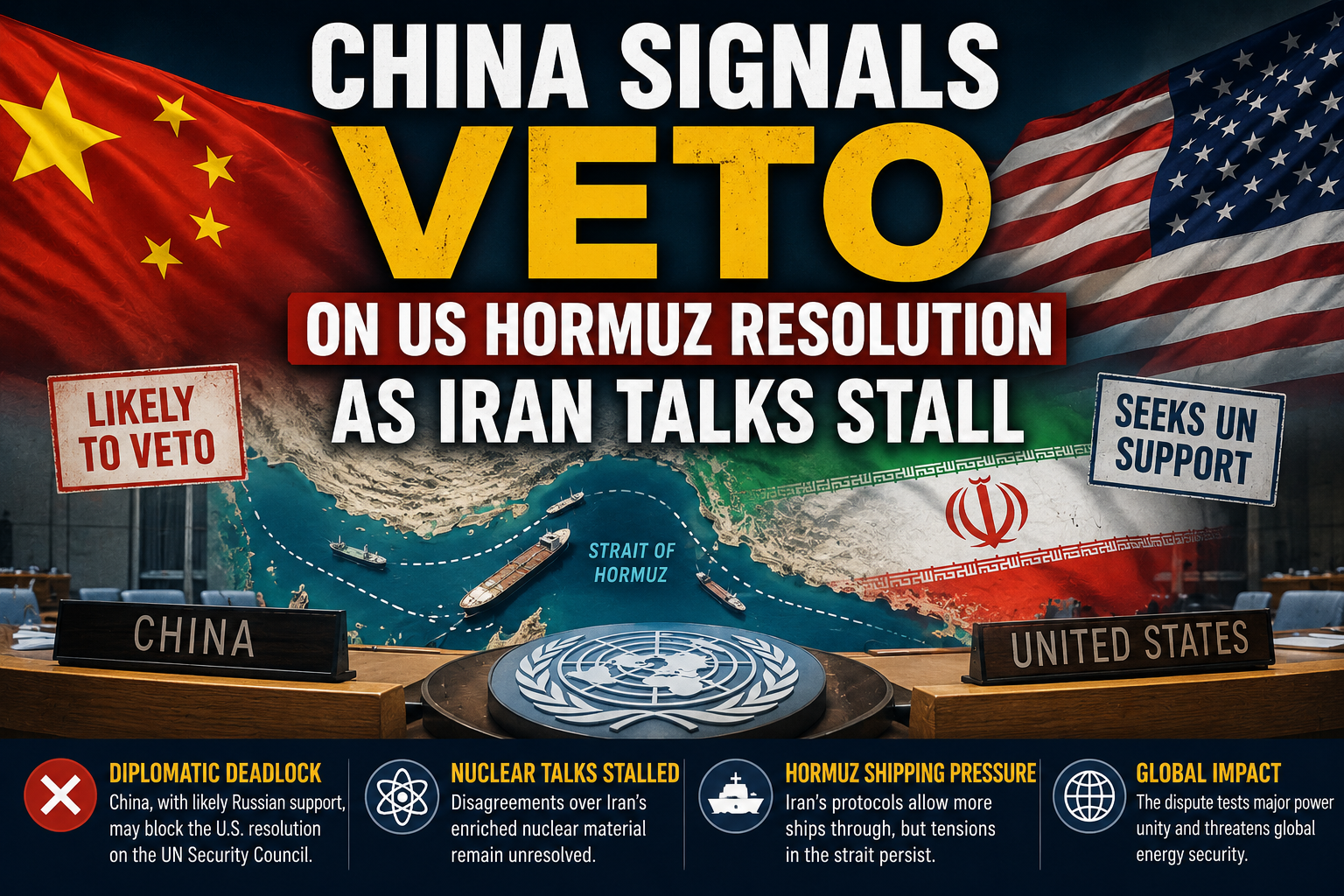
- UN Resistance: China signaled it may oppose a U.S.-backed UN Security Council resolution tied to the Strait of Hormuz.
- Russia Likely Opposed: Diplomatic signals suggest Russia may also resist the measure, reducing chances of passage.
- Iran Talks Stalled: Nuclear negotiations remain unresolved, with disagreements centered on Iran’s enriched nuclear material.
- Shipping Tensions: Iran has reportedly allowed more commercial traffic through the Strait of Hormuz, though tensions remain elevated.
- Diplomatic Pressure: The U.S. is seeking broader international backing to restore confidence in a major global energy route.
| Metric | Value | Context |
|---|---|---|
| UN body involved | Security Council | Venue for proposed Hormuz resolution |
| Key diplomatic actor | China | Signaling possible opposition |
| Secondary opposition | Russia | Expected to resist proposal |
| Main negotiation issue | Enriched nuclear material | Core sticking point in Iran talks |
| Strategic chokepoint | Strait of Hormuz | Major route for global oil shipments |
China Pushes Back on US Hormuz Proposal
China is signaling that it could block a U.S.-supported resolution at the United Nations Security Council aimed at addressing tensions in the Strait of Hormuz, creating a new diplomatic hurdle for Washington’s strategy toward Iran.
Chinese UN Ambassador Fu Cong criticized the timing and substance of the proposed measure, suggesting Beijing sees the initiative as poorly calibrated during a period of heightened regional uncertainty.
Diplomatic observers expect Russia to align with China, potentially preventing the resolution from gaining enough support in the Security Council.
Nuclear Talks Remain in Deadlock
The diplomatic friction comes as efforts to revive negotiations over Iran’s nuclear program continue to face obstacles.
Iran has indicated openness to continued discussions, particularly if China plays a more active role, but disagreements over Tehran’s stockpile of enriched nuclear material remain unresolved.
The lack of progress has complicated international attempts to reduce tensions following recent confrontations involving Gulf shipping and military activity.
Hormuz Remains a Global Flashpoint
The Strait of Hormuz, a narrow waterway connecting Gulf oil producers to global markets, remains at the center of international concern.
Iranian authorities have reportedly allowed increased commercial ship movements through the route under updated operating protocols, easing some immediate supply concerns. However, uncertainty around maritime security continues to weigh on energy markets and diplomatic negotiations.
For Washington, the dispute has become a test of whether major powers are willing to back coordinated pressure on Iran or pursue separate diplomatic channels.