TEHRAN, May 16 —
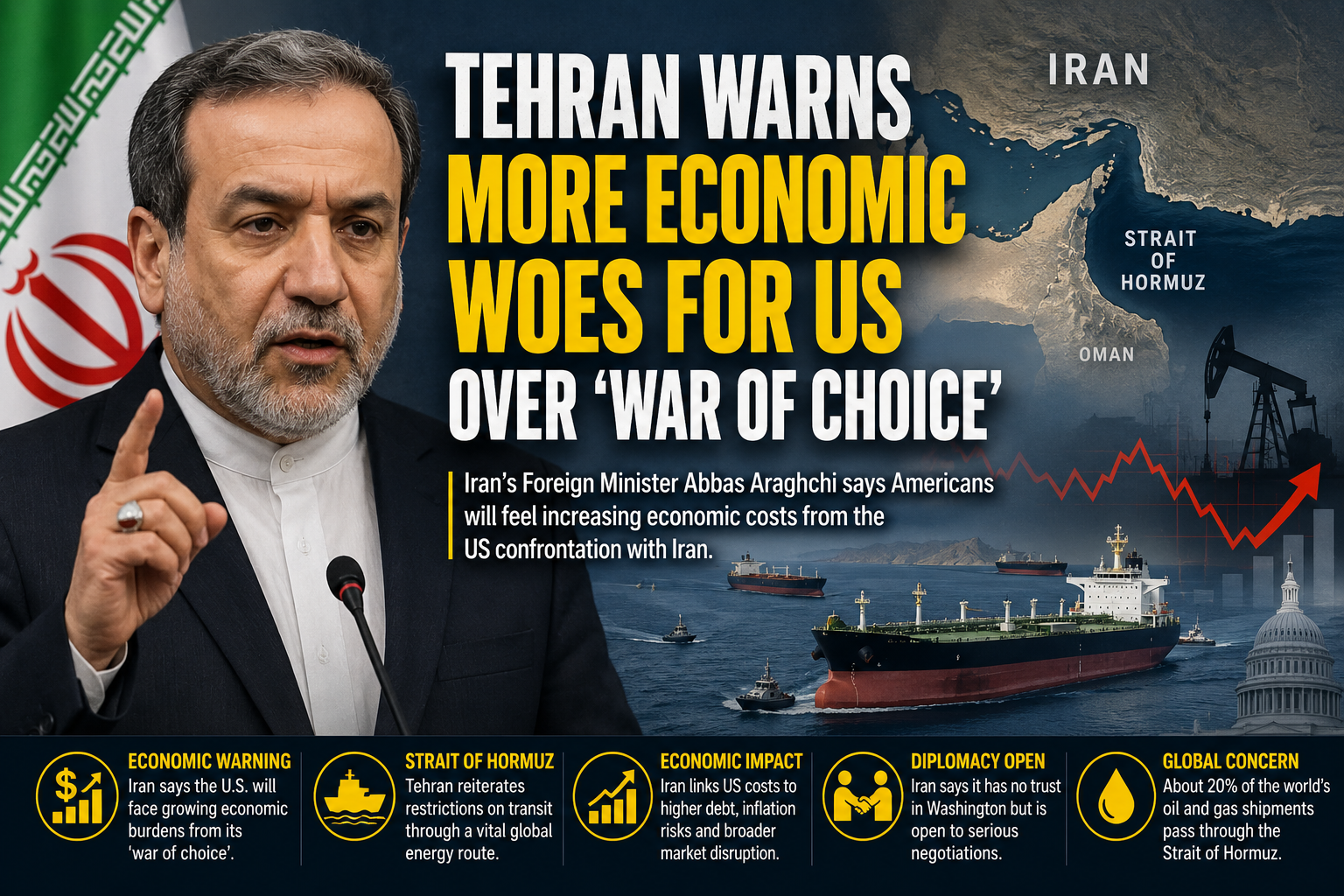
- Iran warning: Foreign Minister Abbas Araghchi said Americans would increasingly feel the economic burden of what Tehran calls a U.S. “war of choice.”
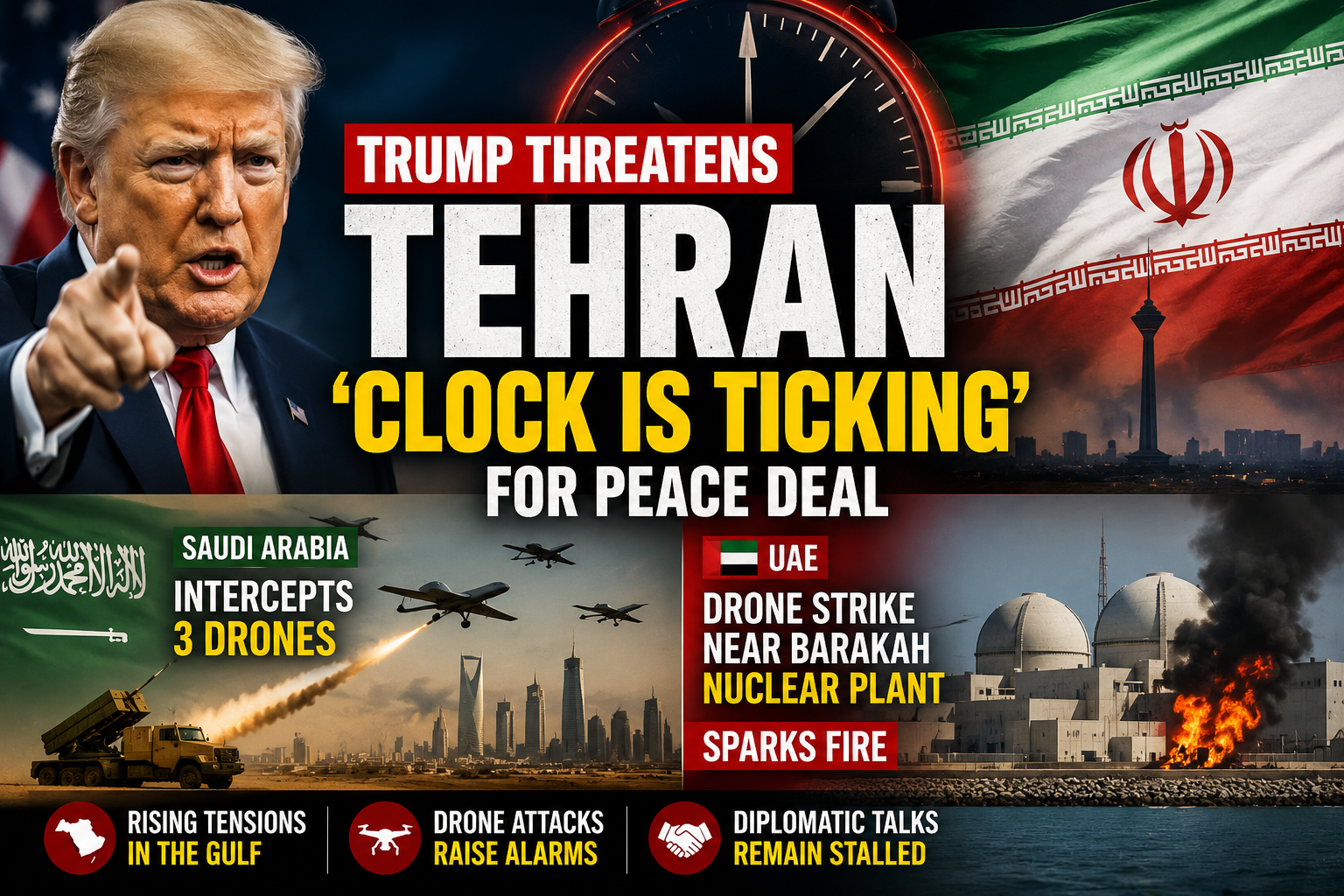
- Hormuz tensions: Iran reiterated restrictions affecting transit through the Strait of Hormuz, a key global energy route.
- Economic pressure: Tehran linked rising U.S. costs to higher debt burdens, consumer pressures, and broader economic disruption.
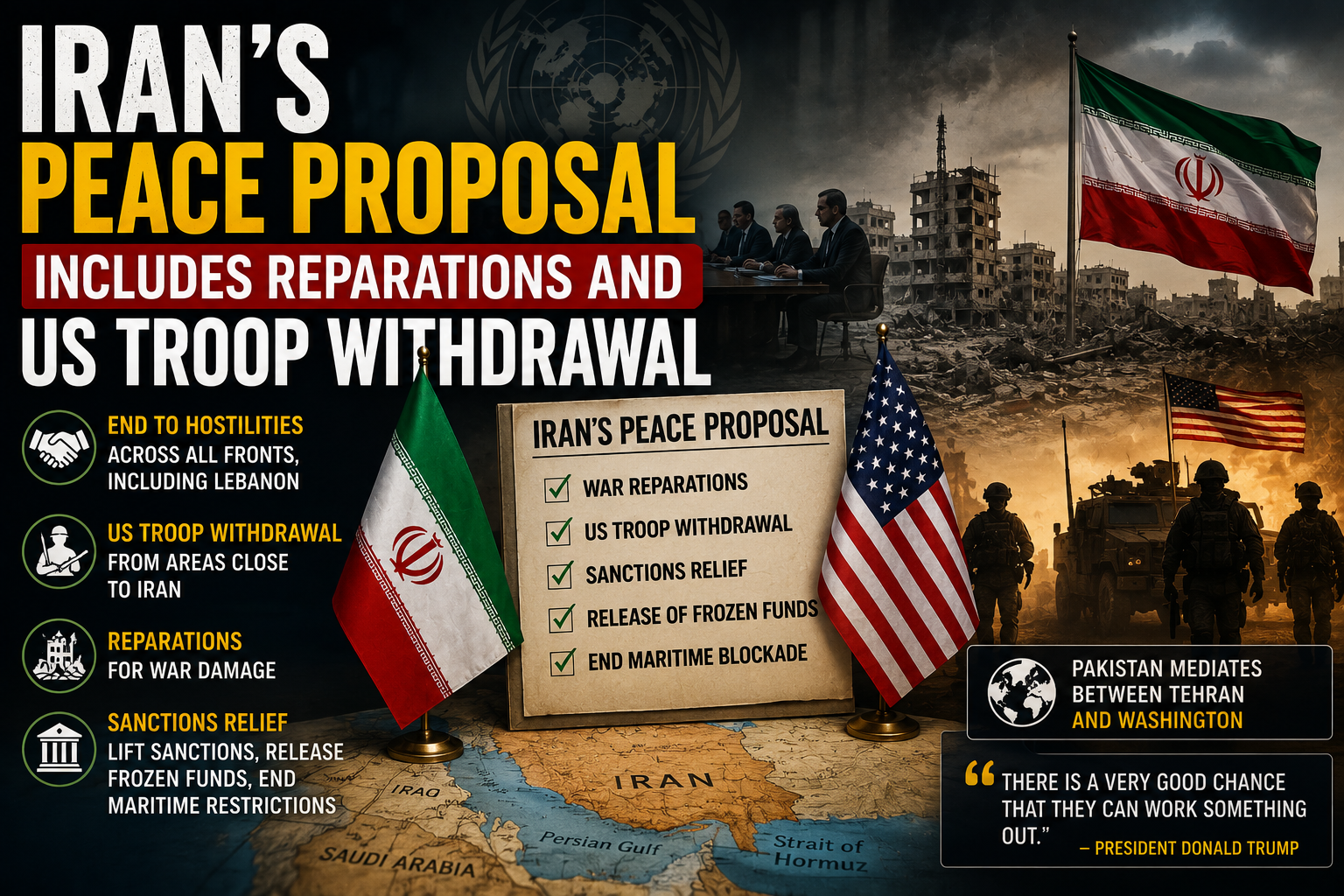
- Diplomatic friction: Iran said trust in Washington remains low but left the door open to negotiations if the U.S. demonstrates seriousness.
- Global energy concern: The Strait of Hormuz handles a major share of the world’s oil and gas shipments, making disruptions closely watched by markets.
| Topic | Detail | Context |
|---|---|---|
| Iranian Warning | “War of choice” | Tehran says U.S. faces rising economic costs |
| Strait of Hormuz | Major global shipping route | Roughly 20% of seaborne oil and gas trade |
| Diplomatic Position | Conditional talks | Iran says trust in U.S. remains low |
| Economic Risk | Inflation and energy volatility | Markets sensitive to supply disruptions |
Tehran Signals Economic Pressure on Washington
Iran’s Foreign Minister Abbas Araghchi warned that the United States could face deeper economic consequences from what he described as a “war of choice” against Tehran, arguing that American households may increasingly feel the financial impact of prolonged tensions.
Speaking amid continued geopolitical friction, Araghchi said the conflict was avoidable and suggested the economic burden would extend beyond military costs to broader consumer pressures in the United States. Iranian officials have repeatedly argued that regional instability and supply disruptions could intensify inflationary risks and strain global markets. :contentReference[oaicite:0]{index=0}
Strait of Hormuz Remains a Flashpoint
Tehran also renewed warnings linked to the Strait of Hormuz, one of the world’s most strategically important shipping corridors. Iranian officials said vessels transiting the route must comply with conditions set by Tehran, reinforcing uncertainty over maritime access. About one-fifth of global seaborne oil and gas trade normally passes through the strait, making any disruption a major concern for energy markets. :contentReference[oaicite:1]{index=1}
The dispute over Hormuz has remained central to broader regional tensions following months of instability involving Iran, the United States, and regional allies. Continued restrictions and shipping concerns have contributed to volatility in oil markets and heightened fears of inflationary pressure worldwide. :contentReference[oaicite:2]{index=2}
Diplomacy Still Possible, Iran Says
Despite harsh rhetoric, Iranian officials indicated diplomacy remains possible if Washington changes its approach. Araghchi said Tehran has “no trust” in the United States but suggested negotiations could continue if American officials show seriousness toward a balanced agreement. :contentReference[oaicite:3]{index=3}