WASHINGTON, June 24 —
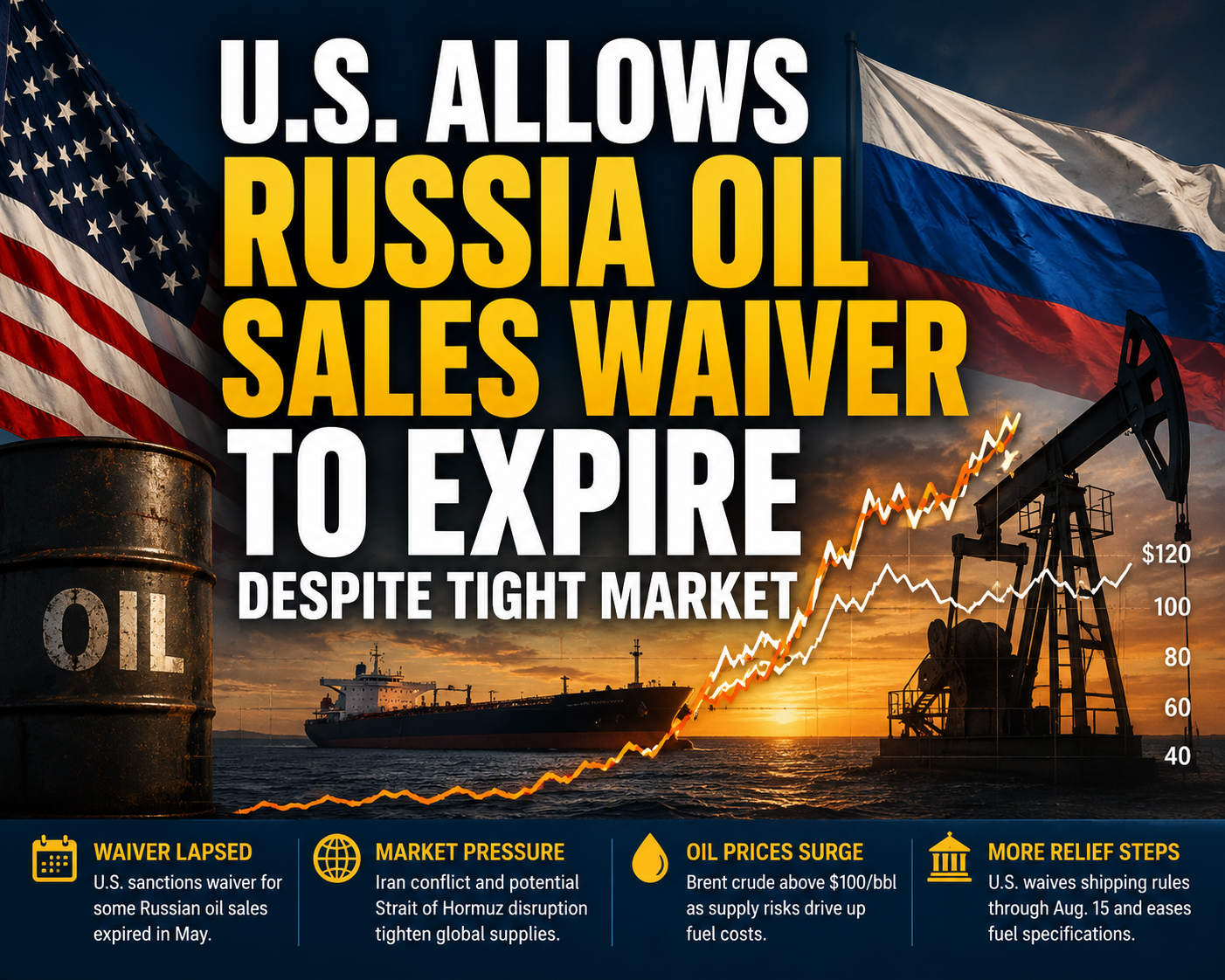
- Waiver Expired: The U.S. allowed a temporary sanctions waiver covering select Russian crude shipments to lapse.
- Previous Extensions: Temporary authorizations were issued in March and April for limited cargoes already loaded onto tankers.
- Oil Market Pressure: Concerns over the Iran conflict and disruptions near the Strait of Hormuz have intensified fears of supply shortages.
- Global Benchmark: Brent crude prices climbed above $100 per barrel amid market volatility.
- International Pressure: Countries including India and Indonesia had pushed Washington to extend sanctions flexibility.
- Policy Response: The administration has temporarily eased some shipping and fuel rules to limit energy market disruptions.
| Metric | Value | Context |
|---|---|---|
| Initial waiver issued | March | Temporary authorization for select Russian crude cargoes |
| Waiver renewal | April | Second extension granted |
| Brent crude price | Above $100/bbl | Global benchmark amid Iran conflict |
| Key supply chokepoint | Strait of Hormuz | Major global oil shipping route |
| Temporary shipping flexibility | Mid-August | Foreign vessels allowed between U.S. ports |
US Ends Temporary Russian Oil Relief
The Trump administration has allowed a temporary waiver permitting limited purchases of certain Russian crude oil to expire, ending a short-lived easing of sanctions intended to stabilize global energy markets.
The waiver, first introduced in March and renewed in April, applied only to a restricted group of Russian oil cargoes already loaded onto ships. Without renewal, transactions previously allowed under the authorization are again subject to sanctions restrictions.
Iran Conflict Raises Energy Concerns
The decision comes as the escalating Iran conflict and disruption risks around the Strait of Hormuz increase pressure on oil markets. The narrow shipping route is a critical artery for global crude exports, and reduced flows have heightened fears of supply shortages.
Oil prices have surged since fighting intensified, lifting costs for gasoline, diesel and other fuel products. Some buyers have reportedly sought alternative supplies, including cargoes from the United States.
Pressure From Allies and Importers
The sanctions waiver had faced criticism from several European governments, which argue restrictions on Russian oil are necessary to reduce Moscow’s wartime revenue tied to the conflict in Ukraine.
At the same time, major energy-importing countries, including India and Indonesia, urged Washington to maintain flexibility as tighter supply conditions threatened economic stability.
Treasury Secretary Scott Bessent previously said vulnerable energy-importing nations requested an extension to avoid supply disruptions during heightened geopolitical tensions.
Additional Measures to Ease Supply Shock
To reduce pressure on fuel markets, the administration has also temporarily allowed foreign vessels to transport crude and commodities between U.S. ports through mid-August and loosened some domestic fuel specifications.
The International Energy Agency has described the ongoing supply disruption as one of the most significant shocks to global oil markets.