NEW YORK, May 20 —
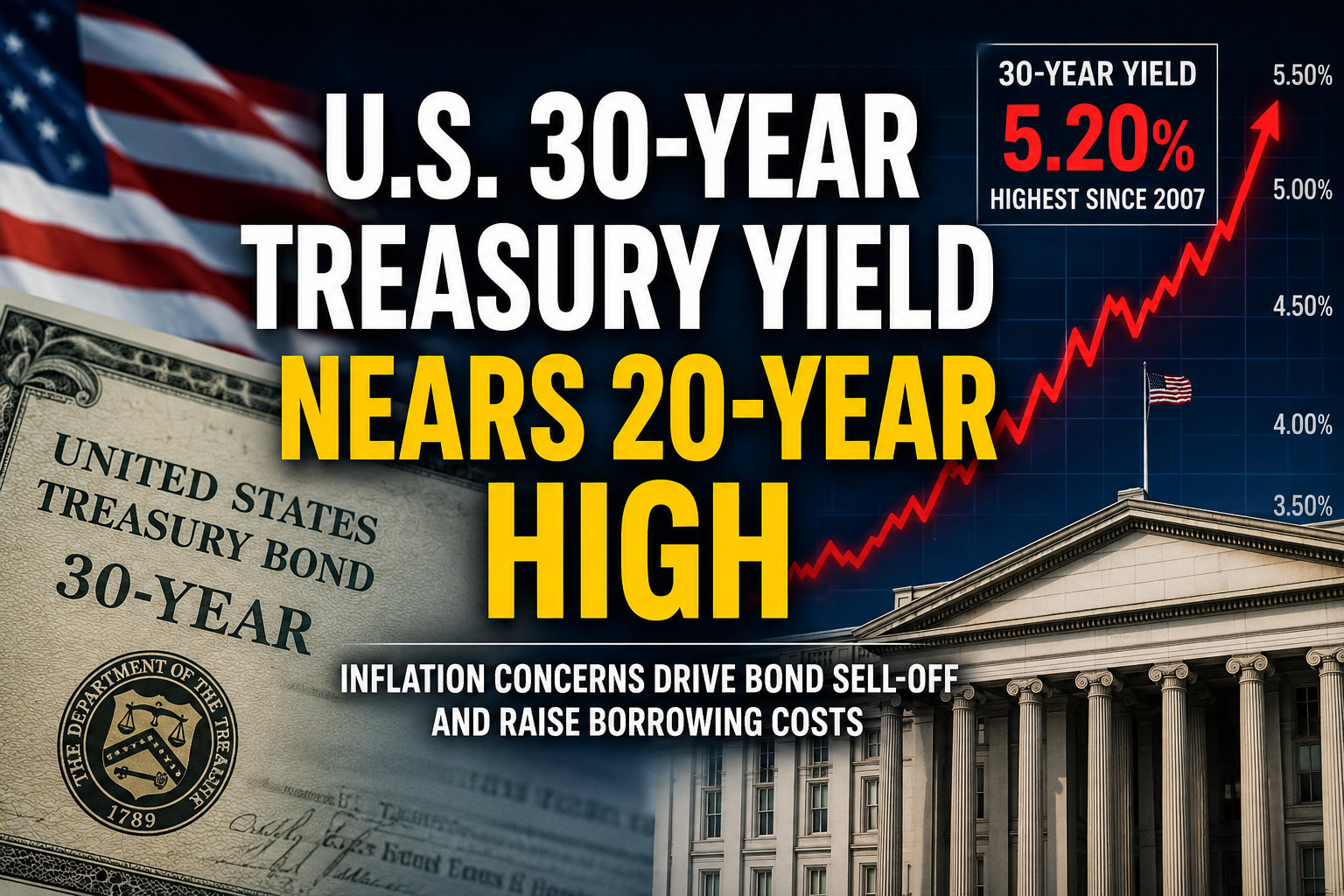
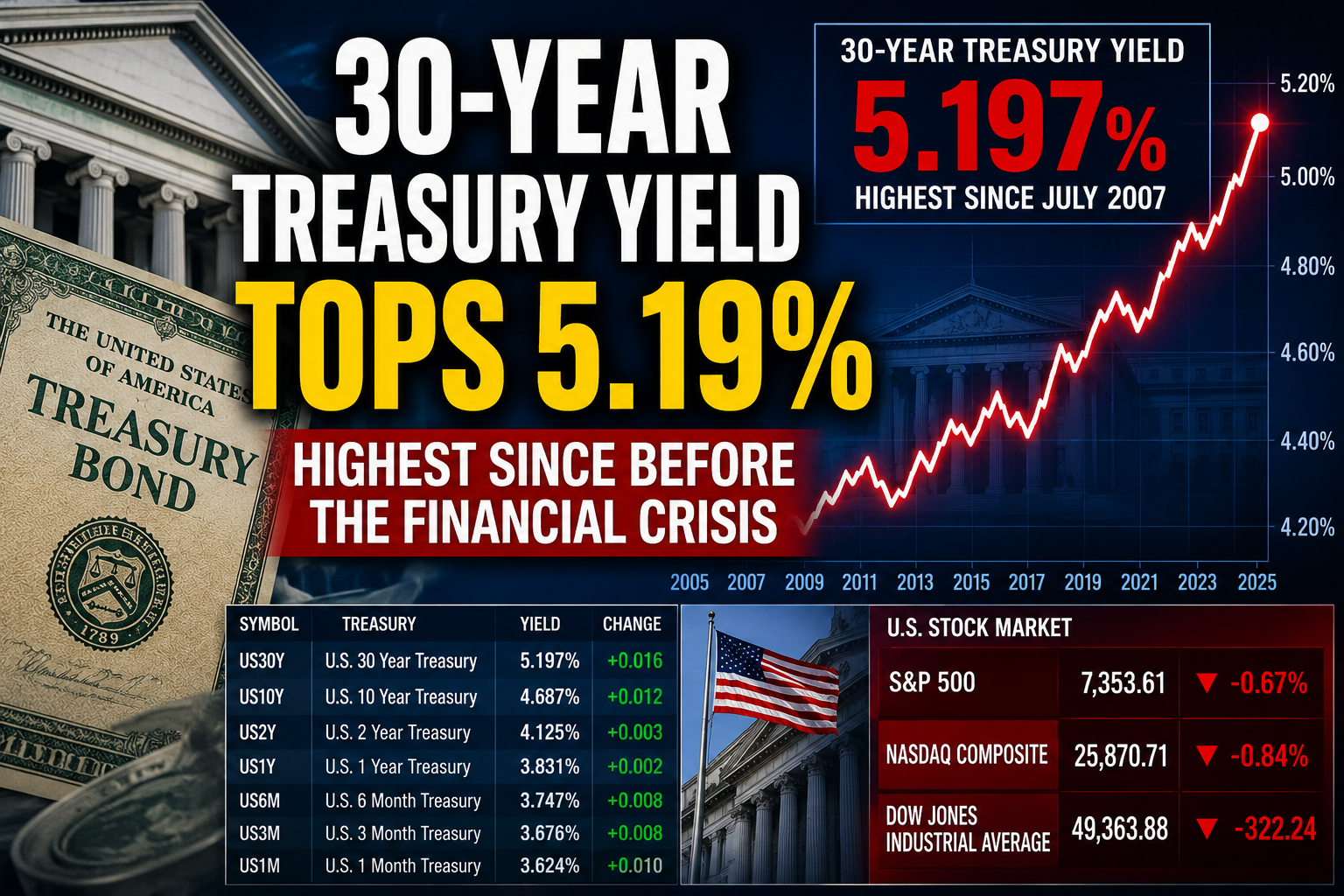
- 30-Year Treasury Yield: The benchmark long bond briefly touched 5.197%, its highest level since July 2007.
- 10-Year Yield: The U.S. 10-year Treasury yield climbed to 4.687%, marking its highest point since January 2025.
- 2-Year Yield: The policy-sensitive 2-year Treasury note rose to approximately 4.12% as traders reassessed Federal Reserve expectations.
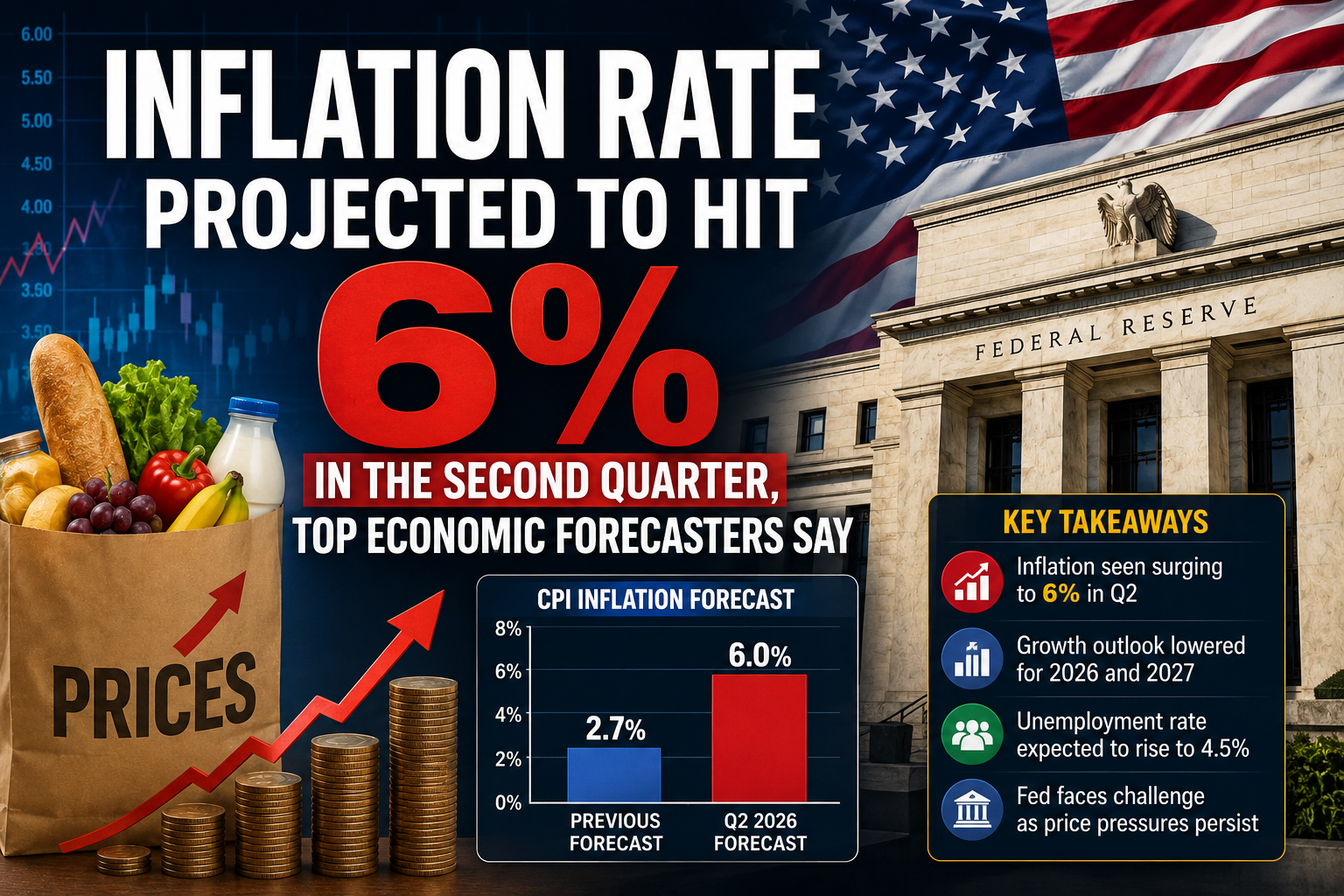
- Inflation Concern: Rising oil prices tied to the Iran conflict fueled fears that inflationary pressures are intensifying.
- Market Impact: The S&P 500 declined 0.67%, the Nasdaq Composite fell 0.84%, and the Dow Jones Industrial Average lost 322.24 points.
- Investor Outlook: A 62% majority of global fund managers surveyed by Bank of America expect the 30-year Treasury yield to reach 6%.
| Treasury Instrument | Yield | Change |
|---|---|---|
| U.S. 30-Year Treasury | 5.197% | +0.016 |
| U.S. 10-Year Treasury | 4.687% | +0.012 |
| U.S. 2-Year Treasury | 4.125% | +0.003 |
| U.S. 1-Year Treasury | 3.831% | +0.002 |
| U.S. 6-Month Treasury | 3.747% | +0.008 |
| U.S. 3-Month Treasury | 3.676% | +0.008 |
| U.S. 1-Month Treasury | 3.624% | +0.010 |
Treasury Sell-Off Pushes Yields Higher
U.S. Treasury yields advanced Tuesday as investors continued selling government bonds amid concerns inflation could be gaining momentum again. The 30-year Treasury bond yield briefly reached 5.197%, its highest level since July 2007, before easing slightly.
Bond prices and yields move in opposite directions, meaning the sharp rise reflects heavy selling in long-dated government debt. Investors have increasingly questioned whether inflation will cool as quickly as previously expected.
Inflation Fears Shift Federal Reserve Expectations
Market concerns intensified after recent economic signals suggested inflation pressures may be strengthening, driven in part by higher oil prices linked to tensions involving Iran.
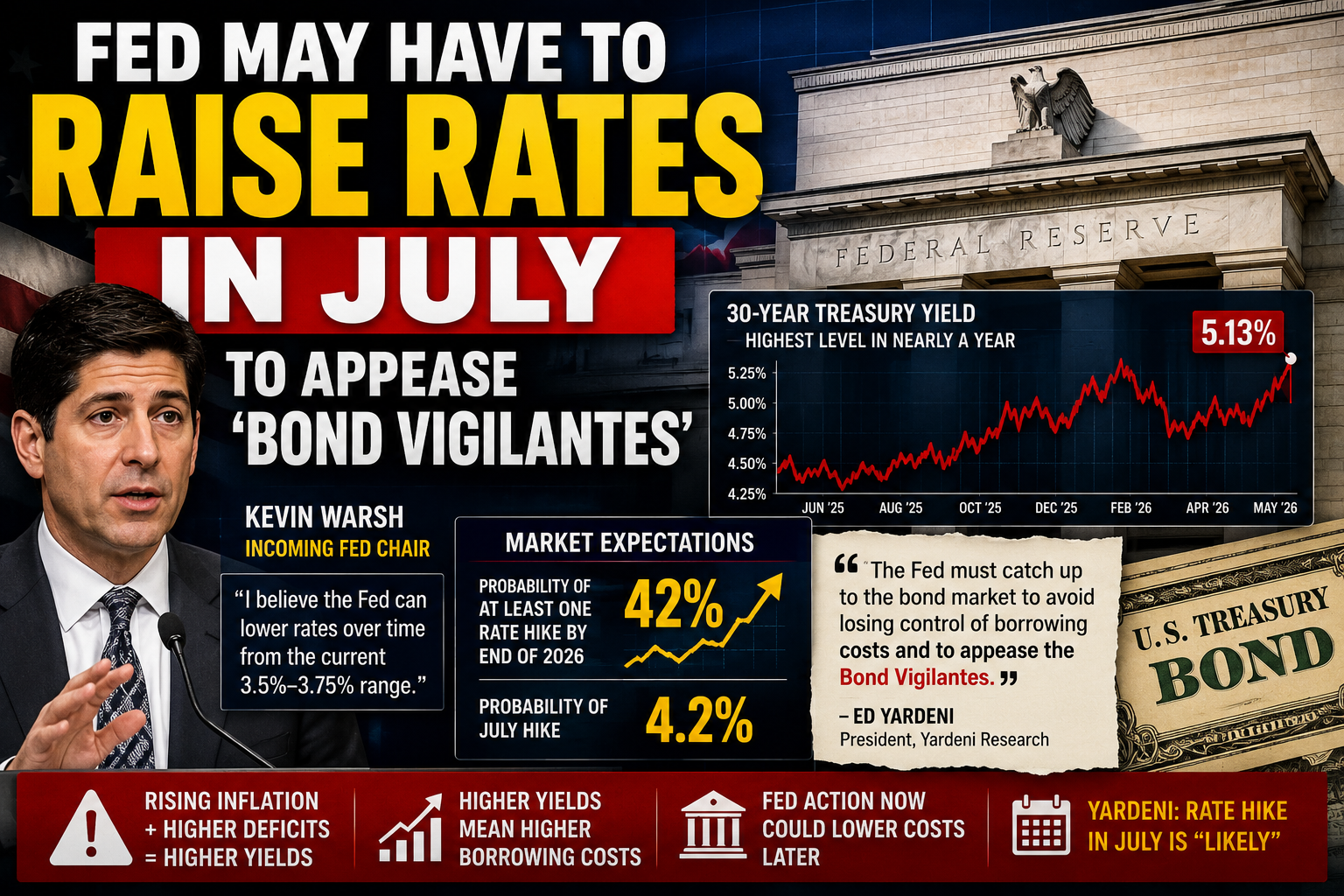
The renewed inflation outlook has prompted traders to reconsider expectations for Federal Reserve policy. Earlier forecasts had centered on eventual rate cuts, but some investors are now pricing in the possibility of additional rate increases.
Why Consumers May Feel the Impact
The 10-year Treasury yield, which serves as a benchmark for mortgages, auto loans, and some consumer borrowing products, climbed to 4.687%, its highest level since early 2025.
Higher Treasury yields can translate into more expensive borrowing costs for households through elevated mortgage rates and credit card interest charges. Persistent higher rates may also weigh on consumer spending and economic activity.
Stocks Face Valuation Pressure
Equity markets weakened as Treasury yields climbed. Higher borrowing costs tend to pressure growth-oriented companies because future earnings become less attractive when discounted at elevated interest rates.
The S&P 500 ended lower for a third consecutive session, while the Nasdaq Composite and Dow Jones Industrial Average also declined.
Some market strategists warn that if the 30-year Treasury yield reaches around 5.25%, stock valuations could face more sustained pressure.
Global Bond Markets Also Under Pressure
Rising long-term yields were not limited to the United States. Government bond yields in Germany, the United Kingdom, and Japan also remained elevated.
Germany’s 30-year bund yield stood near 3.684%, while Britain’s 30-year gilt yield approached 5.773%. Japan’s equivalent long-term bond yield recently hit a record high, signaling global concerns around inflation and borrowing costs.