SAN FRANCISCO, May 20 —
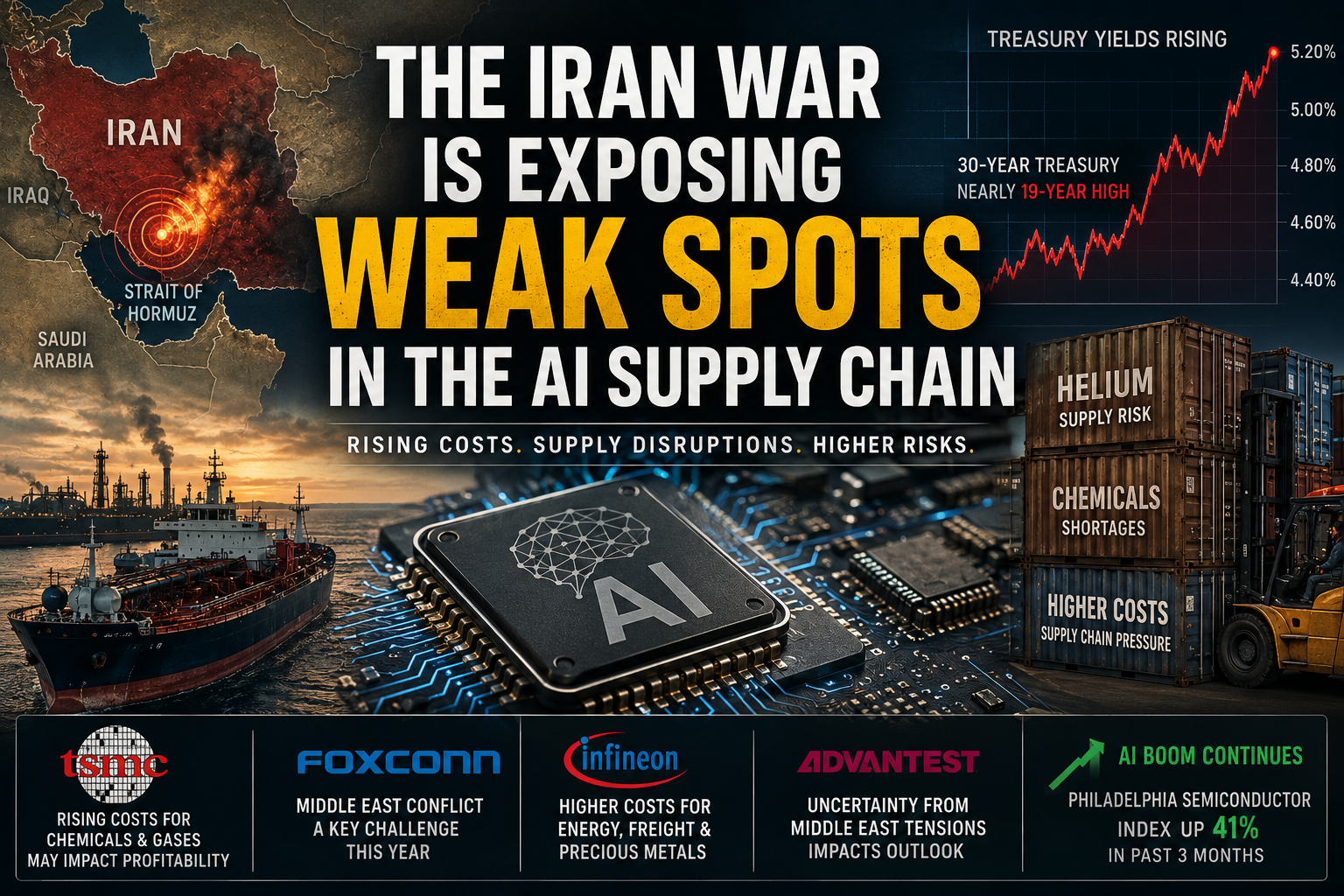
- Supply Chain Pressure: Semiconductor firms warned the Iran war is disrupting access to key materials and increasing logistics costs.
- Helium Risk: Qatar, which supplied over 30% of the global helium market in 2025, faces export disruption tied to regional instability.
- Corporate Warnings: TSMC, Foxconn, Infineon, and Advantest flagged supply chain and cost concerns linked to Middle East tensions.
- AI Boom Continues: Despite risks, the Philadelphia Semiconductor Index gained 41% over the past three months.
- Profitability Concerns: Rising energy, freight, and raw material costs could pressure margins for semiconductor manufacturers and AI infrastructure firms.
| Metric | Value | Context |
|---|---|---|
| Qatar Global Helium Market Share | 30%+ | Share of global market in 2025 |
| Philadelphia Semiconductor Index Gain | 41% | Increase over past 3 months |
| VAT Group Q1 Sales Hit | 20–25 million Swiss francs | Estimated impact from disruptions |
| Estimated USD Impact | $25.5M–$32M | Equivalent loss estimate |
AI Hardware Supply Chains Face New Stress
The conflict involving Iran is exposing vulnerabilities in the supply chains behind the global artificial intelligence boom, as semiconductor manufacturers warn of rising costs and shortages of critical industrial materials.
Chipmakers and electronics manufacturers say disruptions tied to Middle East instability are increasing expenses for energy, logistics, and raw materials essential to semiconductor production.
Helium and Key Materials Under Pressure
One major concern is helium, a critical gas used in semiconductor manufacturing. Supply risks have intensified as regional disruptions affect Qatar, one of the world’s largest helium exporters and a key supplier to global chipmakers.
Industry analysts warn that shortages could ripple across semiconductor production lines, particularly as chip demand remains elevated due to AI infrastructure expansion.
Access to other materials, including bromine, aluminum, and industrial chemicals used in fabrication, has also become more difficult and expensive as transport routes face disruption.
Chipmakers Warn of Rising Costs
Several major technology suppliers highlighted Middle East-related risks during earnings season.
Taiwan Semiconductor Manufacturing Co. (TSMC), a key supplier for Nvidia, said higher prices for gases and chemicals could pressure profitability. Foxconn, the world’s largest electronics contract manufacturer, also cited Middle East tensions as a major challenge this year.
German semiconductor company Infineon warned of rising freight, energy, and precious metal costs, while Japan’s Advantest said geopolitical instability has increased uncertainty around semiconductor demand and logistics.
AI Rally Masks Growing Risks
Despite operational challenges, investor optimism around AI has largely overshadowed supply concerns.
The Philadelphia Semiconductor Index, which tracks major U.S.-listed chip companies, has surged 41% in the last three months as enthusiasm around AI spending remains strong.
Analysts say companies with diversified suppliers, inventory stockpiles, and pricing power are best positioned to withstand disruptions. Firms heavily dependent on concentrated supply chains could face increasing margin pressure if the conflict persists through the rest of the year.
Prolonged Conflict Could Raise Stakes
Industry observers caution that a longer conflict could have broader consequences for AI infrastructure economics, particularly for data centers that rely on advanced chips and energy-intensive computing.
For now, the direct impact on earnings remains manageable. But executives and analysts say prolonged oil disruptions and material shortages could become a larger headwind if geopolitical tensions remain unresolved.