NEW YORK, May 18 —
- Bond Warning: Treasury markets are signaling concern that the Federal Reserve may be too slow to respond to inflation risks.
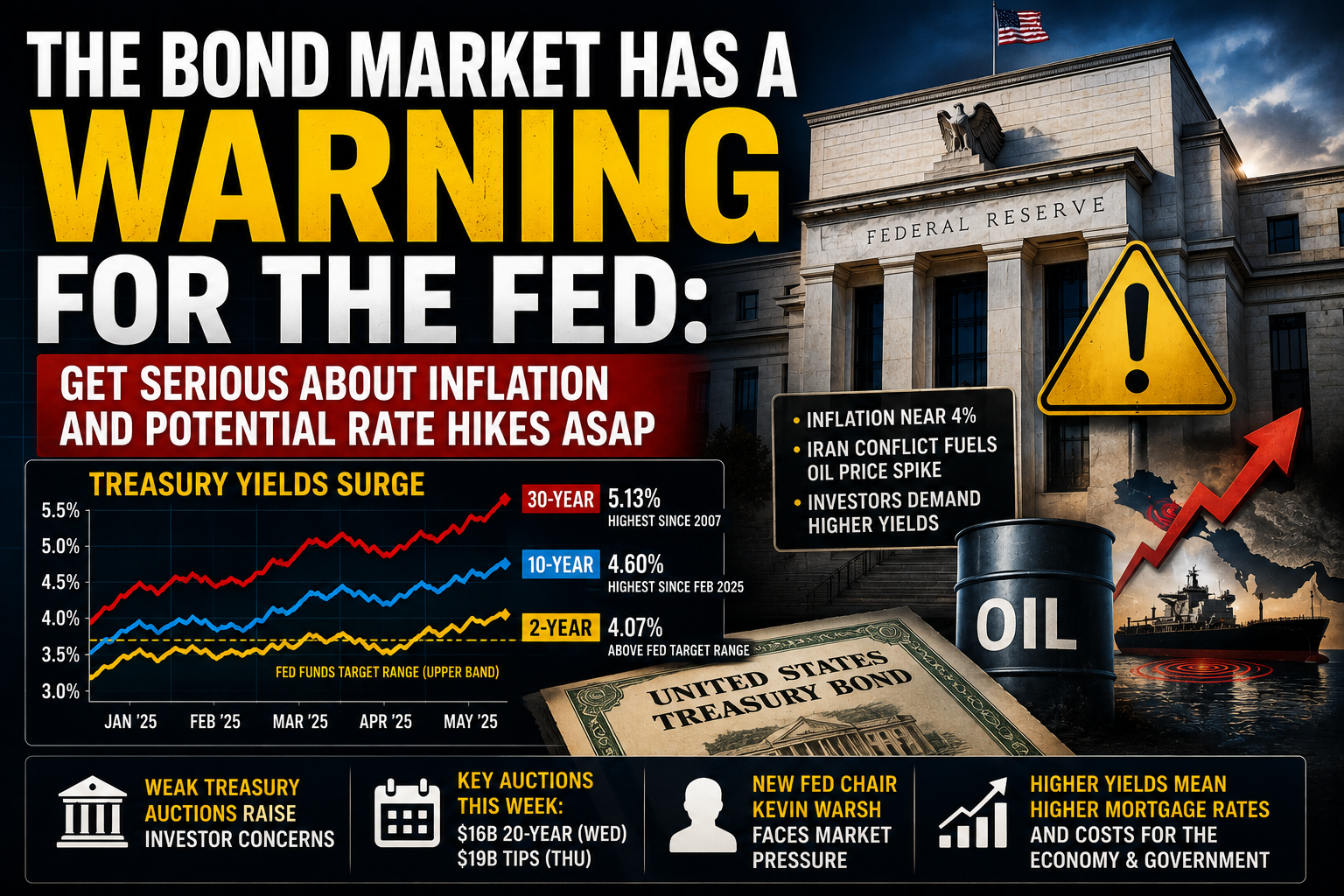
- 2-Year Yield: The policy-sensitive 2-year Treasury yield climbed above 4%, exceeding the Fed’s upper target range.
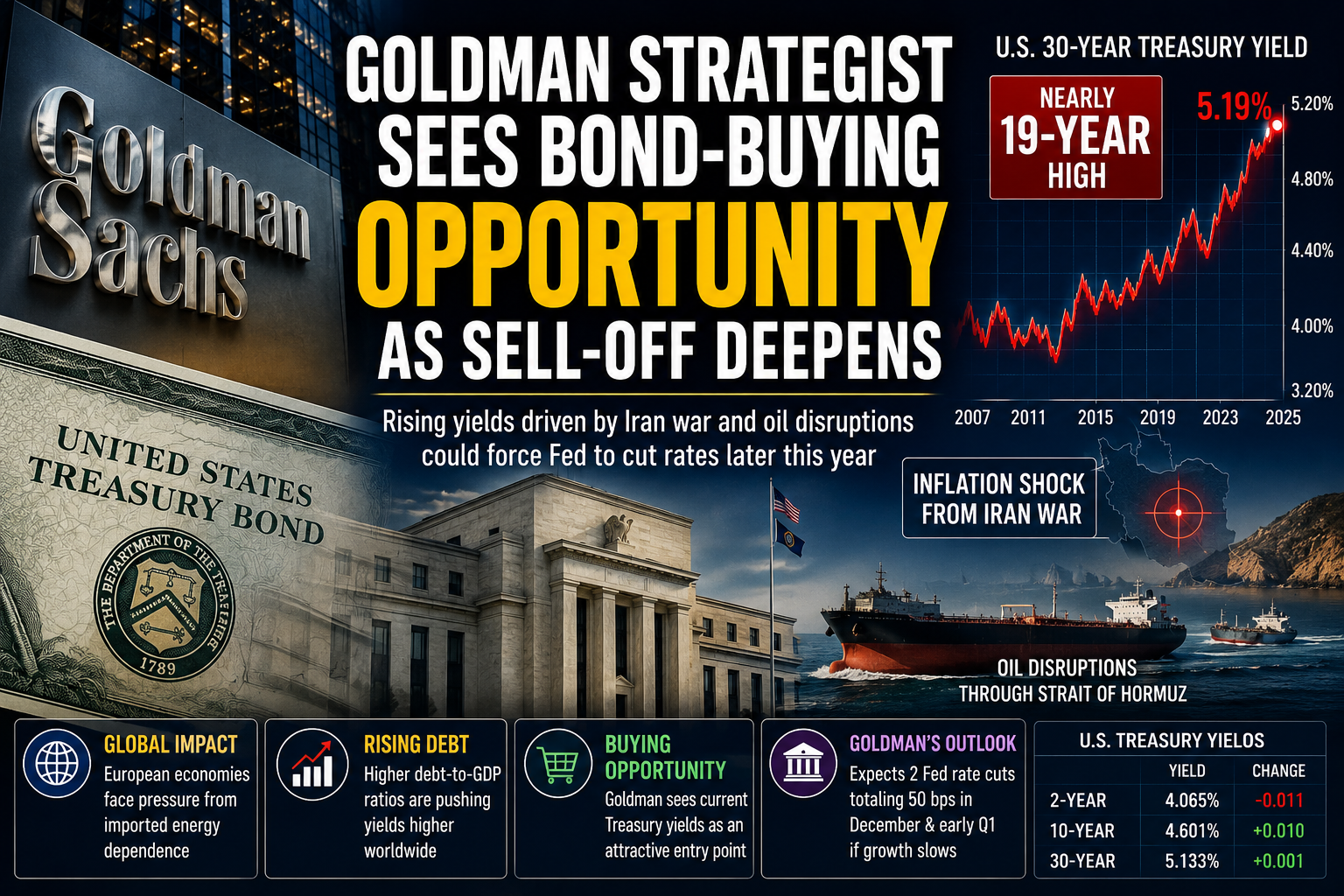
- 30-Year Yield: The 30-year Treasury yield rose to about 5.13%, its highest level since 2007.
- Oil Shock Risk: Investors fear the Iran conflict and disruptions in the Strait of Hormuz could intensify inflation.
- Fed Pressure: Analysts say policymakers may need to adopt a more hawkish tone before the June policy meeting.
- Auction Concerns: Weak Treasury auction demand has added to fears of rising borrowing costs.
| Metric | Value | Context |
|---|---|---|
| 2-Year Treasury Yield | Above 4.0% | Exceeds Fed upper target range |
| 10-Year Treasury Yield | Near 4.6% | Highest since Feb. 2025 |
| 30-Year Treasury Yield | 5.13% | Highest since 2007 |
| Oil Price Level | Above $100/barrel | Inflation concern |
| Fed Meeting | June 16–17 | First under Kevin Warsh |
| 20-Year Treasury Auction | $16 billion | Scheduled this week |
Treasury Market Sends Inflation Warning
The U.S. bond market is signaling growing concern that the Federal Reserve may not be moving aggressively enough to contain inflation pressures, particularly as geopolitical tensions drive energy prices higher.
Treasury yields climbed sharply across maturities as investors sold government debt, demanding higher compensation amid fears inflation could accelerate due to the ongoing Iran conflict and oil supply disruptions.
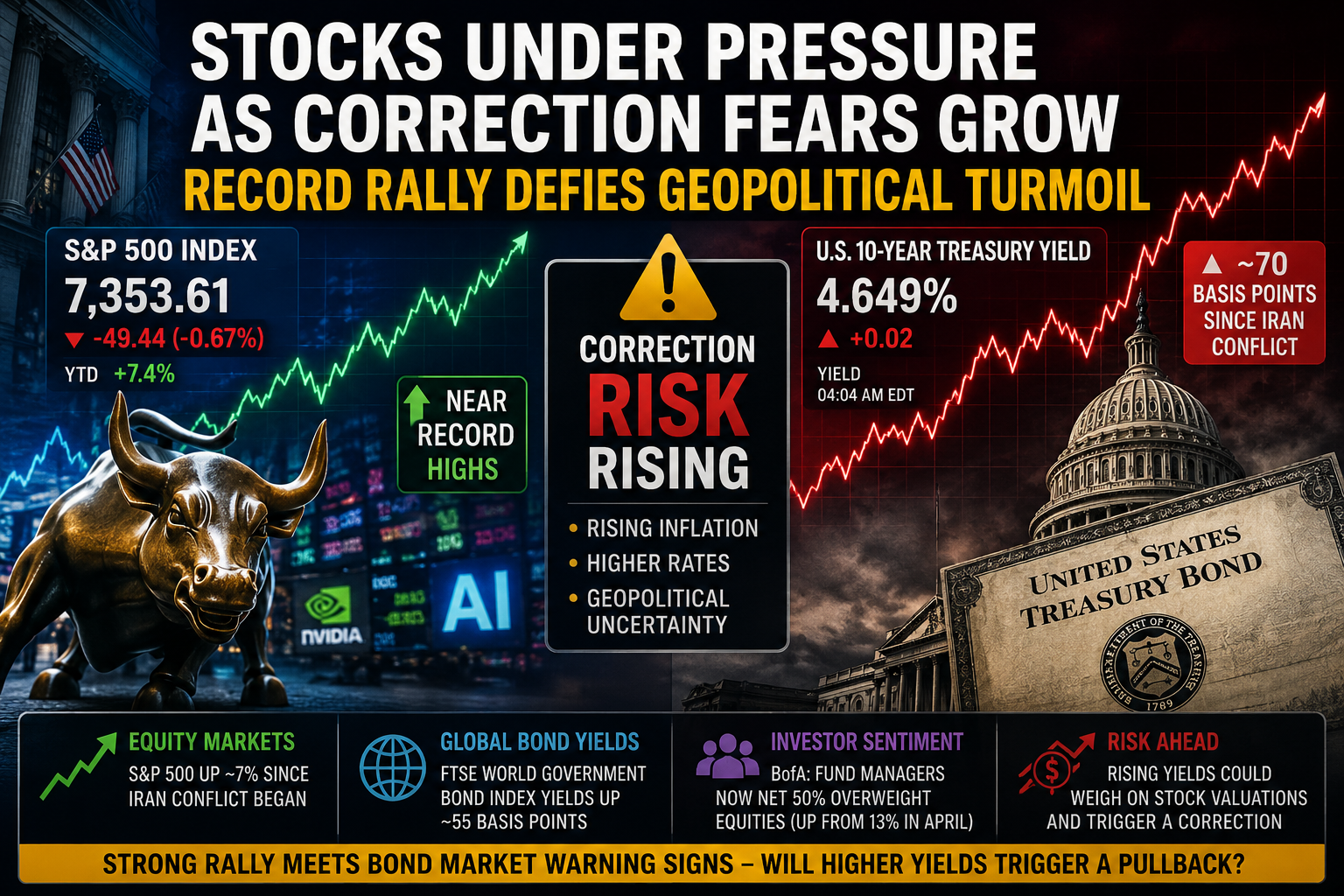
The policy-sensitive 2-year Treasury yield rose above 4%, while the 10-year yield approached 4.6%, both reaching their highest levels since early 2025. The 30-year yield climbed to roughly 5.13%, marking its highest level since 2007.
Oil Prices and Iran Conflict Add Pressure
Investor concerns have intensified as the standoff involving Iran disrupts shipping through the Strait of Hormuz, a critical global oil transit route.
Higher crude prices above $100 per barrel have raised fears that inflation could remain elevated, complicating expectations that the Fed would eventually move toward interest rate cuts.
Market strategists say bond investors increasingly expect policymakers to acknowledge inflation risks more directly.
Pressure Builds on New Fed Leadership
The growing unease arrives just before the Federal Reserve’s June 16–17 policy meeting, the first chaired by incoming Fed leader Kevin Warsh.
Analysts at Macquarie warned that if Fed officials fail to shift toward more hawkish messaging, markets may conclude policymakers are falling behind inflation pressures, potentially triggering another rise in long-term borrowing costs.
Some investors now see the possibility of the 10-year Treasury yield climbing toward 5%, which would likely push mortgage rates and business financing costs even higher.
Markets Brace for More Volatility
The Treasury market also faces a busy calendar of government debt sales, including auctions for 20-year bonds and Treasury Inflation-Protected Securities (TIPS).
Economists say weaker demand for government debt could further increase pressure on yields at a time when U.S. debt levels remain elevated and inflation concerns persist.