NEW YORK, May 20 —
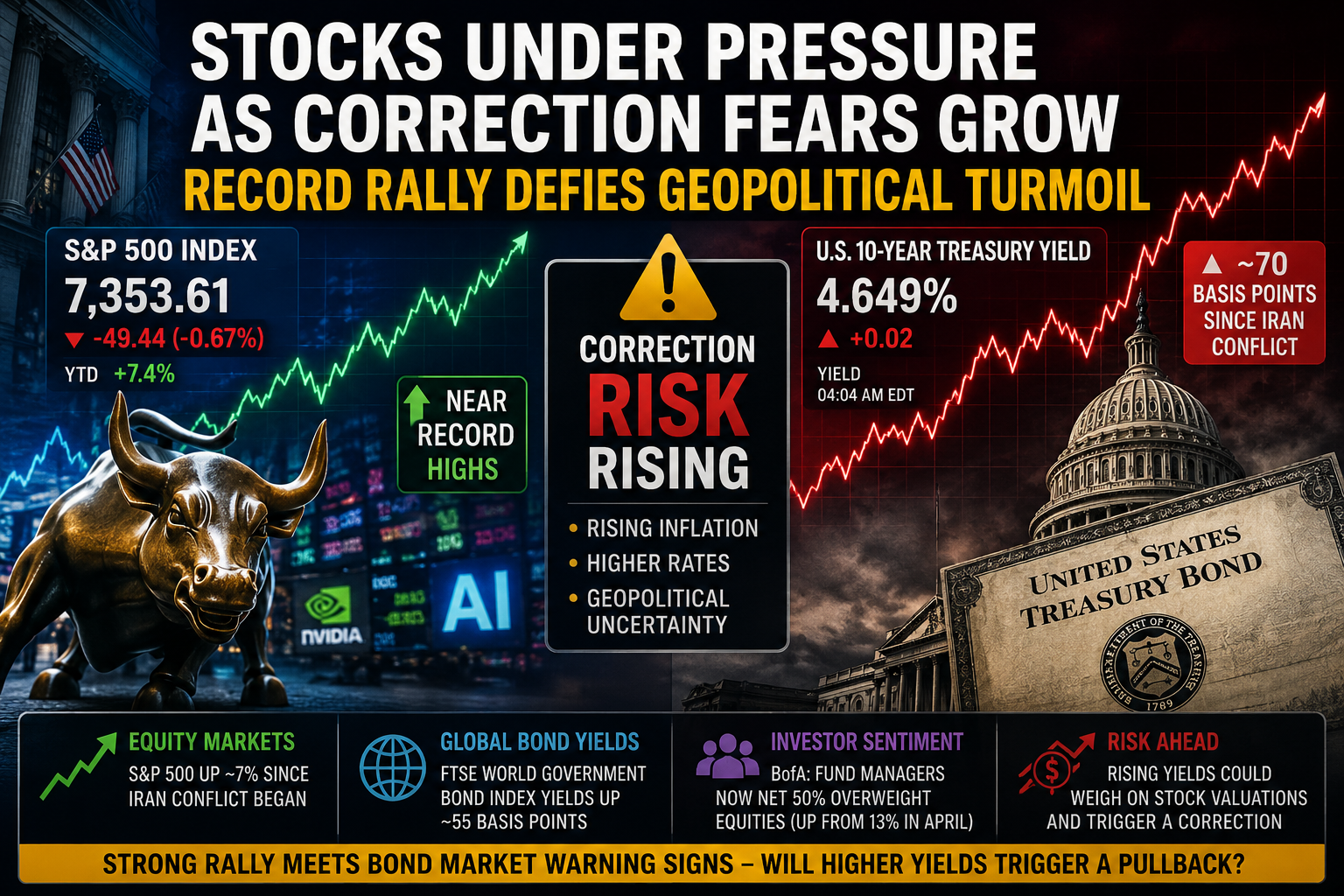
- S&P 500 Rally: The S&P 500 is up 7.4% year-to-date and has gained nearly 7% since the Iran conflict began.
- Bond Warning Signal: The U.S. 10-year Treasury yield has climbed roughly 70 basis points during the conflict, signaling inflation concerns.
- Global Bond Selloff: The FTSE World Government Bond Index recorded an aggregate yield rise of about 55 basis points across sovereign debt markets.
- Investor Positioning: Bank of America found fund managers shifted from 13% overweight equities in April to 50% overweight in May.
- Equity Inflows: U.S. equity funds attracted $70 billion in inflows over the past seven weeks, according to Barclays.
- Correction Risk: Analysts warn elevated yields could begin pressuring equity valuations if inflation remains persistent.
| Metric | Value | Context |
|---|---|---|
| S&P 500 YTD Gain | 7.4% | Performance in 2026 |
| S&P 500 Gain Since Iran Conflict | ~7% | Since late February |
| U.S. 10-Year Yield Increase | ~70 basis points | During conflict period |
| FTSE World Government Bond Yield Rise | ~55 basis points | Across sovereign debt |
| Equity Fund Inflows | $70 billion | Past 7 weeks |
| Fund Manager Equity Positioning | 50% overweight | Up from 13% in April |
| Managed Assets Surveyed | $517 billion | Bank of America poll |
Stocks Rally While Bonds Flash Warning Signs
Global equity markets have largely brushed aside geopolitical turmoil and inflation concerns in 2026, extending a powerful rally fueled by enthusiasm around artificial intelligence and resilient corporate earnings.
But bond markets are sending a different message.
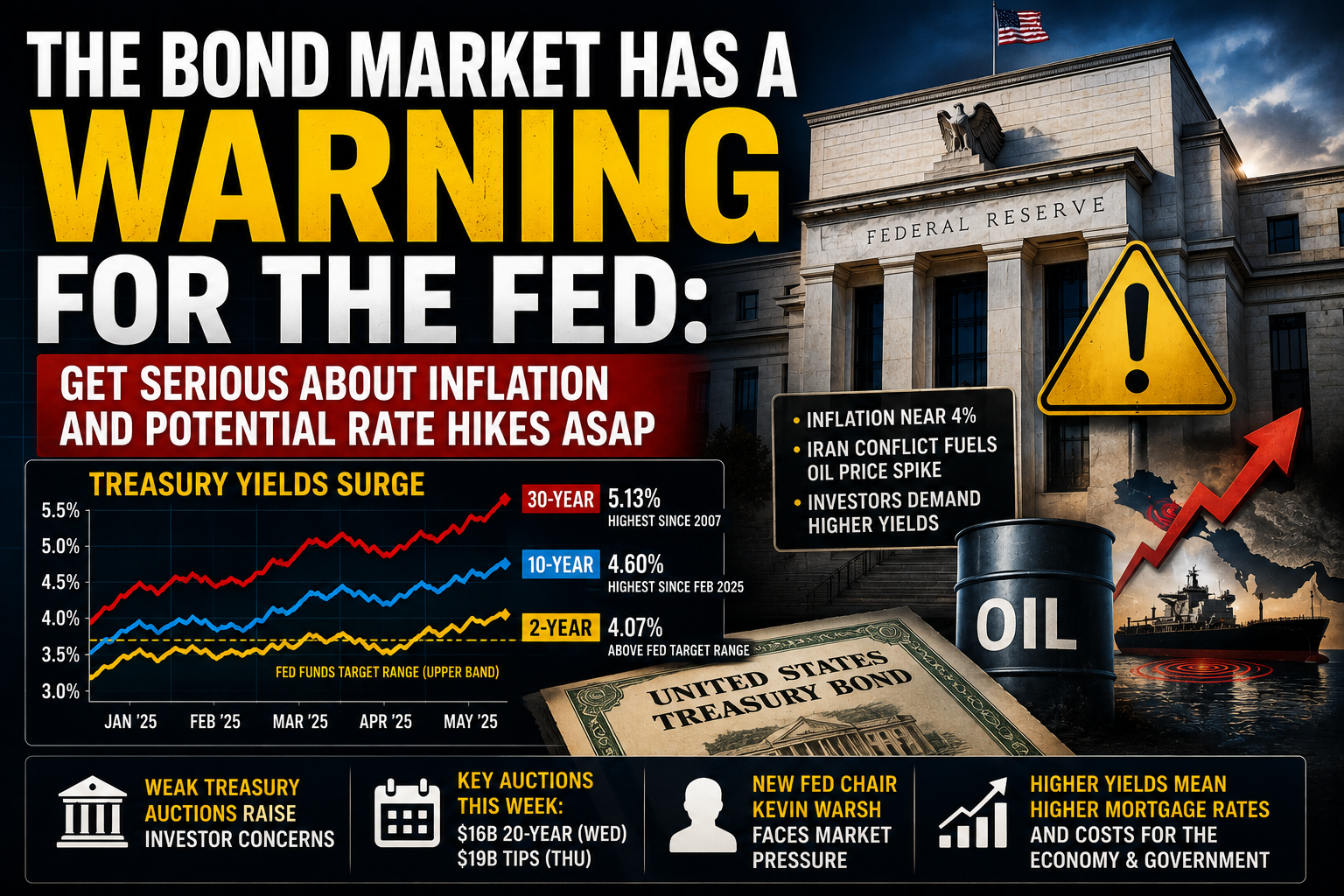
Government bond yields have risen sharply since the conflict involving Iran intensified, reflecting growing concerns about inflation, higher oil prices, and the possibility that central banks may keep interest rates elevated for longer.
The divergence between stocks and bonds is increasingly drawing scrutiny from investors concerned that equities may be underestimating macroeconomic risks.
Treasury Yields Rise as Inflation Fears Grow
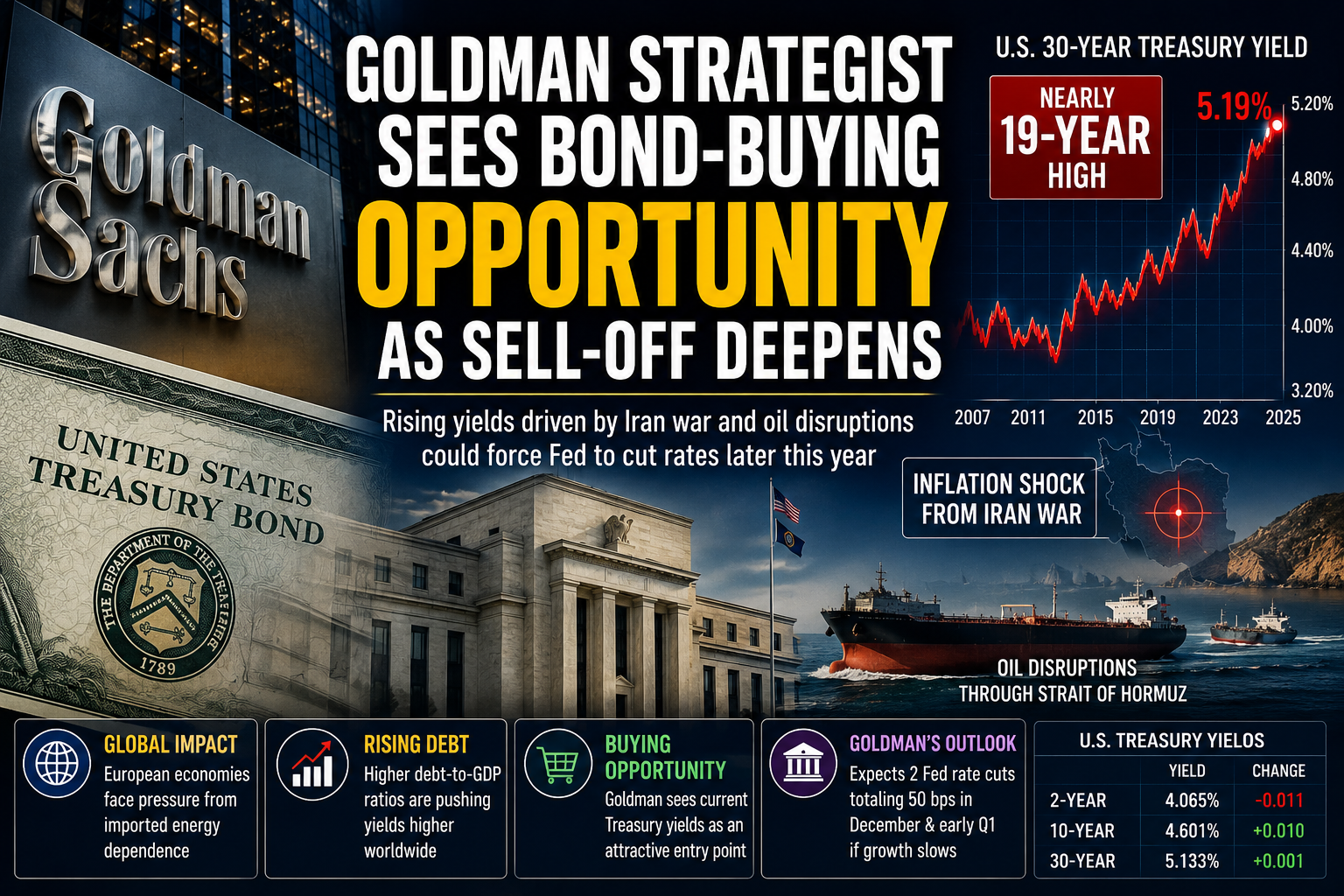
The benchmark U.S. 10-year Treasury yield, a key gauge for borrowing costs and economic expectations, has climbed roughly 70 basis points during the conflict.
At the same time, the 30-year Treasury yield recently touched levels not seen since 2007, raising pressure on growth-focused sectors and richly valued stocks.
Bond investors appear to be pricing in a more prolonged inflation environment driven by higher energy costs and geopolitical uncertainty, even as stock markets continue to rebound.
Equity Optimism Reaches Extreme Levels
Investor sentiment toward equities has remained strong despite rising macro risks.
A recent Bank of America survey showed fund managers sharply increased stock exposure in May, moving from net 13% overweight equities to net 50% overweight in a single month.
Meanwhile, Barclays reported U.S. equity funds received $70 billion in inflows over the last seven weeks, one of the strongest stretches in decades.
However, strategists warn heavily invested portfolios leave markets vulnerable to profit-taking if bond yields continue rising.
Correction Fears Begin to Build
Several market analysts say the recent rebound in stocks may face increasing pressure as higher yields begin weighing on valuations.
Historically, rising interest rates reduce the attractiveness of future corporate earnings, particularly for high-growth technology companies that have powered much of the recent rally.
Some investors warn that prolonged inflation, slowing growth, or a longer geopolitical conflict could eventually trigger a broader pullback in equities.
Not Everyone Sees a Bear Market
Despite caution, some strategists argue the underlying backdrop still supports risk assets.
Analysts at Deutsche Bank said major market selloffs historically require a sustained oil shock, clear economic contraction, or aggressive monetary tightening — conditions they argue are not yet fully in place.
For now, markets remain caught between optimism around AI-driven growth and rising concerns that bond markets may eventually force a reality check.