NEW YORK, May 20 —
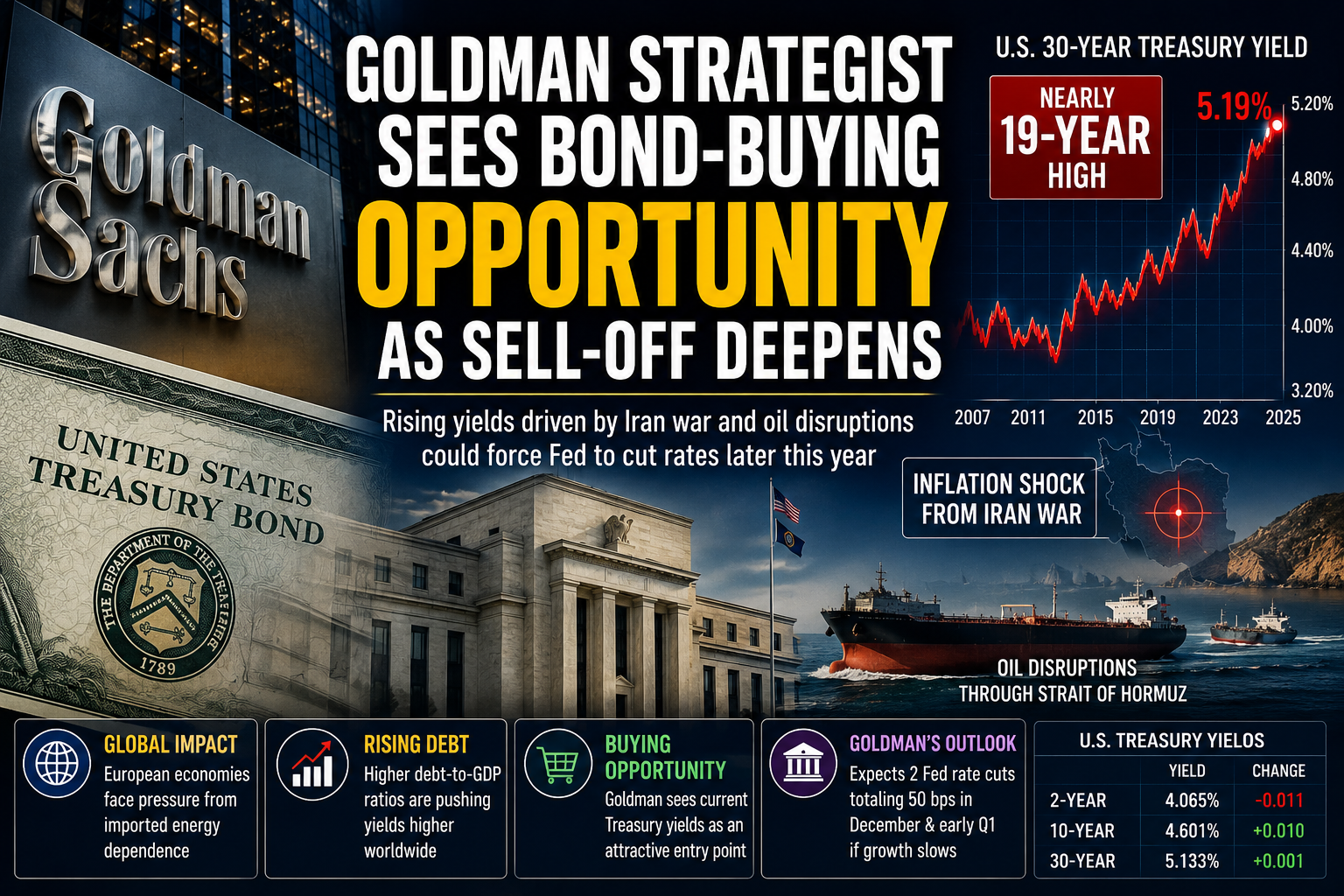
- 30-Year Yield Spike: The U.S. 30-year Treasury yield climbed to a nearly 19-year high amid inflation concerns linked to the Iran conflict.
- Oil Disruption: Supply interruptions through the Strait of Hormuz increased energy price pressures and fueled inflation fears.
- Goldman View: Goldman Sachs Asset Management said current Treasury yields present an attractive entry point for bond investors.
- Fed Forecast: Goldman still expects two rate cuts totaling 50 basis points, now projected for December and early Q1.
- Global Pressure: Rising debt burdens and energy dependence are pushing bond yields higher in Europe and other major markets.
| Metric | Value | Context |
|---|---|---|
| 30-Year Treasury Yield | Nearly 19-year high | Highest since 2007 |
| Expected Fed Rate Cuts | 50 basis points | Forecast by Goldman Sachs |
| Expected Timing | December & Early Q1 | Revised timeline |
| Strait of Hormuz Impact | Oil disruptions | Inflation pressure driver |
Goldman Sees Value in Higher Bond Yields
Rising Treasury yields may offer investors a chance to buy bonds at attractive levels despite mounting inflation concerns, according to Goldman Sachs Asset Management.
Speaking on CNBC, portfolio strategist Lindsay Rosner said the recent selloff in government bonds has pushed yields to levels that could reward investors if economic growth weakens and forces the Federal Reserve to ease monetary policy.
Inflation Shock Drives Treasury Selloff
The sharp rise in yields comes as investors react to inflation concerns linked to the conflict involving Iran. Disruptions to oil shipments through the Strait of Hormuz have raised worries about energy supply constraints and higher prices.
The 30-year Treasury yield recently reached its highest level in nearly two decades, reflecting investor concerns that inflation could remain elevated longer than expected.
Bond yields rise when prices fall, meaning investors have been selling Treasurys as inflation risks increase and expectations for near-term Federal Reserve rate cuts fade.
Goldman Still Expects Fed Cuts
Despite rising expectations that policymakers may keep rates elevated for longer—or potentially tighten further—Goldman Sachs continues to forecast rate reductions if economic growth slows materially.
The investment bank expects the Federal Reserve to deliver 50 basis points of cuts, though the timeline has shifted toward December and early next year as officials assess how higher oil prices affect inflation.
Rosner said slowing economic activity could eventually outweigh inflation risks, creating a stronger case for lower borrowing costs.
Global Bond Markets Under Pressure
The rise in yields extends beyond the United States. European markets face additional pressure from dependence on imported energy, while concerns over expanding government debt levels are contributing to higher borrowing costs globally.
As central banks balance inflation risks against slowing growth, investors remain focused on whether elevated yields represent a warning sign—or a buying opportunity.