NEW YORK, May 12 —
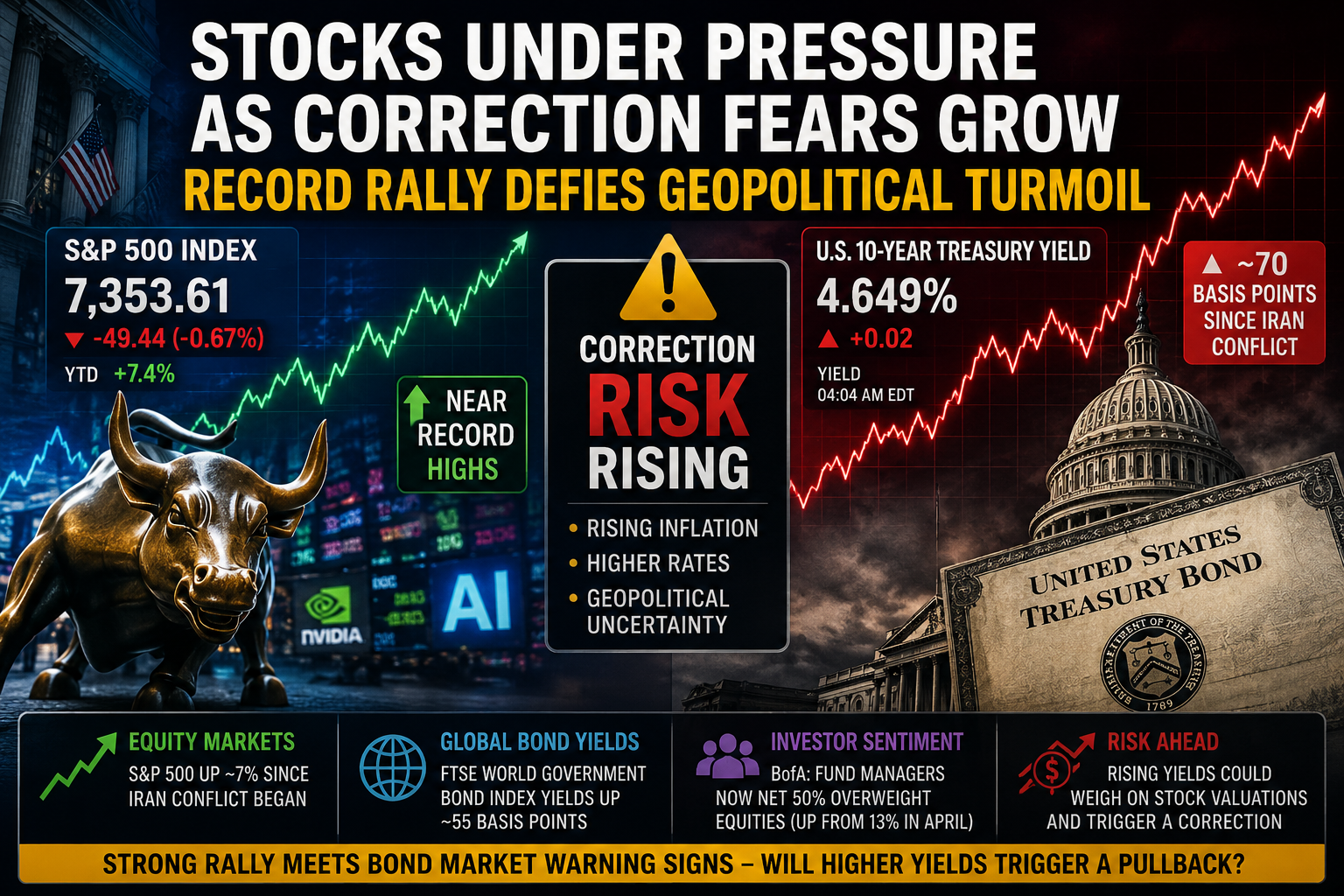
- Record Close: The S&P 500 finished above 7,400 for the first time in history.
- Daily Gain: The benchmark index rose about 0.2% in Monday trading.
- Nasdaq High: The Nasdaq Composite also reached another record closing level.
- Market Recovery: The S&P 500 has gained nearly 17% since its yearly low on March 30.
- Volatility Watch: Wall Street’s volatility index, often called the market’s “fear gauge,” moved higher as geopolitical uncertainty remained elevated.
- Conflict Risk: Investor concerns continue over whether the Iran conflict could extend into the summer and affect energy prices and economic growth.
| Metric | Value | Context |
|---|---|---|
| S&P 500 Closing Level | 7,400+ | First-ever close above the milestone |
| S&P 500 Daily Gain | 0.2% | Monday trading session |
| Nasdaq Composite Gain | 0.1% | Back-to-back record close |
| S&P 500 Recovery | 17% | Rise since March 30 low |
| VIX Move | +6.92% | Market volatility indicator |
| Brent Crude Move | +0.90% | Oil price reaction |
Wall Street Pushes Higher
U.S. stocks climbed to new highs on Monday, with the S&P 500 closing above the 7,400 mark for the first time despite renewed geopolitical concerns tied to the conflict involving Iran.
The benchmark index advanced roughly 0.2%, extending a strong rebound that has lifted equities nearly 17% from lows reached in late March.
The Nasdaq Composite also posted another record close, signaling continued investor appetite for risk despite broader uncertainty.
Geopolitical Risks Still in Focus
Markets pushed higher even after President Donald Trump warned that an Iran cease-fire arrangement remained fragile, describing it as being on “life support.”
Investors continue to assess whether an extended conflict could increase pressure on oil markets, inflation and broader economic activity during the summer months.
Volatility Signals Investor Caution
Even as stock benchmarks climbed, Wall Street’s volatility gauge moved higher, suggesting investors remain cautious about geopolitical risks.
Analysts say equities have so far remained resilient due to expectations for steady corporate earnings, strong technology sector performance and confidence that economic disruption remains contained.